İngilizce
(Coral Sea, Australia) I DEAD in the sheep-pen he lies,…
Aramak için en az iki harf yaz.
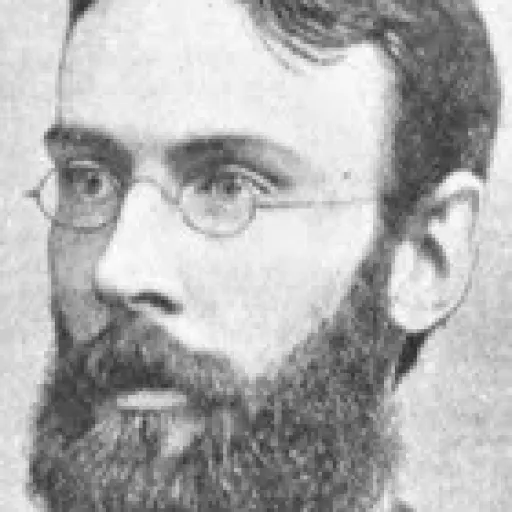
Francis William Lauderdale Adams was an essayist, poet, dramatist, novelist and journalist who produced a large volume of work in his short life. Early life Adams was born in Malta the son of Andrew Leith Adams F.R.S., F.G.S., an army surgeon, who became afterwards well known as a scientist, a fellow of the Royal Society, and an author of natural history books set in different parts of the British empire. Francis' mother, Bertha Jane Grundy, became a well-known novelist. Francis was educated at Shrewsbury School and from 1879 as an attache in Paris. He took up a teaching position as an assistant master at Ventnor on the Isle of Wight, for two years. He joined the Social Democratic Federation in London in 1883. In 1884 he married Helen Uttley and migrated to Australia where he started work as a tutor on a station in Jerilderie N.S.W., but soon moved on to Sydney and then Queensland, and dedicated himself to writing. Australia In 1884 Adams published a volume of poems, Henry and Other Poems (London), his autobiographical novel, Leicester, an Autobiography' (1884). In 1886 a collection of Australian Essays on topics such as Melbourne, Sydney and the poet Adam Lindsay Gordon was published in Melbourne and London. During the time in Australia he contributed to several periodicals, including The Bulletin. Adams then went to Brisbane and published 'Poetical Works' (1886, Brisbane) which is a quarto volume of over 150 pages printed in double columns. His wife died giving birth to a baby boy, Leith, who also died. Adams remained in Brisbane until the early part of 1887, and published a novel, Madeline Brown's Murderer, (1887, Sydney). After a short stay in Sydney Adams married again, returned to Brisbane, and remained there until about the end of 1889 writing leaders for the Brisbane Courier. At the end of 1887 Adams published his best known collection of verseSongs of the Army of the Night, which created a sensation in Sydney and,later, went through three editions in London. He returned to England in early 1890 and published two novels, John Webb's End, a Story of Bush Life (1891, London), and The Melbournians (1892). A volume of short stories, Australian Life, came out in 1892. Adams' health was failing rapidly from an incurable lung-disease and he spent the winter of December 1892-February 1893 in Alexandria to finish his book attacking the British occupation of Egypt. The result, 'The New Egypt' was released after his death in 1893. Other posthumous publications were 'Tiberius'—a striking drama, with an Introduction by William Michael Rossetti, which presents a new view of the Emperor's character—and his first novel was revised and republished as 'A Child of the Age' in 1894. The last of his posthumous publications was 'Essays in Modernity' in 1899. Suicide During a massive and (probably fatal) haemorrhage caused by tuberculosis, Adams shot himself at a boarding house in Margate. He had long carried a pistol for this purpose. He was survived by his second wife, Edith (née Goldstone), who assisted his suicide but was not convicted of any crime. A self-professed 'Child of his Age', Adams combined in his life and work many distinctive features of both fin de siècle British culture and the Australian radical nationalism of the 1890s, including a strong sympathy with socialist and feminist movements. Summary Adams' energy and drive can be seen through his large output of written work in his short lifetime. He often wrote quickly and did little revision, living as he did on the proceeds of his own work rather than with the support of a family or sinecure. Songs of the Army of the Night has been reprinted in many editions, but the reputation of these poems ascends from their engagement with social issues, rather than their value as pure poetry for Adams was deeply sympathetic towards downtrodden races and men. At a time when London Dock labourers worked for four-pence an hour he could not help but raise his voice, and the rhetoric of his At the West India Docks echoed throughout the world of labour. Some of his verses provoked resentment in Conservative circles; but Adams perceived, as few did in those times, the depth of poverty and misery of a large part of the British nation, in an age before the introduction of unemployment insurance and old-age pensions. He is also important as a writer of novels who was in touch with contemporary social issues and genres. His work, though sometimes hasty and unneven, is always interesting for its treatment of themes, such as the portrayal of women in Australia, or of nationalism (eg. The Melbournians, a society romance which features an Australian heroine and a democratic young Australian journalist). Although he never intended to be a journalist, once in Australia Adams took to the work quickly and was very highly regarded by colleagues in Sydney and Brisbane for his work, particularly on the Brisbane Courier (where he wrote editorial leaders) and the Sydney Bulletin (to which he contributed mostly verse and paragraphs). He was an astute and intelligent (if sometimes impetuous) critic both of literature and of the social and political milieux he worked in.)
(Coral Sea, Australia) I DEAD in the sheep-pen he lies,…
HE asked me of my friend — 'a clever man; Such various talent, business, journalism; A pen that might some day have sent out ‘leaders’ From our greatest newspapers.' — 'Yes, all th…
I In a Sampan (Min River, Fo Kien) Up in the misty morning,…
SHRIEKS out of smoke, a flame of dung-straw fire That is not quenched but hath for only fruit What writhes and dies not in its rotten root: Two things made flesh, the visible desir…
UP from the oven pit, The hell where poor men toil, At the sunset hour he comes Clean-clothed, washed from soil.…
(To ——) HAD you lived when a tyrant King Strove to make all the slaves of one,…
'TIS not when I am here, In these homeless homes, Where sin and shame and disease And foul death comes;…
. . . They caught him at the bend. He and his son Sat in the car, revolvers in their laps. From either side the stone-walled wintry road There flashed thin fire-streaks in the rain…
'YES, let Art go, if it must be That with it men must starve — If Music, Painting, Poetry Spring from the wasted hearth!'…
ALOLL in the warm clear water, On her back with languorous limbs, She lies. The baby upon her breasts Paddles and falls and swims.…
(For the Irish Delegates in Australia) DO you want to hear a story, With a nobler praise than 'glory,'…
SIR, we approve your curling lip and nose At this vile sight. These men, these women are 'brute beasts'? — Who knows, Sir, but that you are right?…
(A Memory of August, 1883) I STOOD in the ghastly gleaming night by the swollen, sullen flow Of the dreadful river that rolls her tides through the City of Wealth and…
I SEE a Land of desperate droughts and floods: I see a land where Need keeps spreading round, And all but giants perish in the stress: I see a Land where more, and more, and more…
To Mary Robinson 'WHAT, are you lost, you pretty little lady? This is no place for such sweet things as you. Our bodies, rank with sweat, will make you sicken,…
15 / 91 gösteriliyor
Sana daha iyi bir okuma deneyimi sunabilmek için sitemizde çerez kullanıyoruz. Kişisel verilerin KVKK ve GDPR kapsamında işlenir; hangi çerezlere izin verdiğini dilediğin zaman değiştirebilirsin.