İngilizce
BRAVE flowers--that I could gallant it like you, And be as little vain! You come abroad, and make a harmless show, And to your beds of earth again.…
Aramak için en az iki harf yaz.
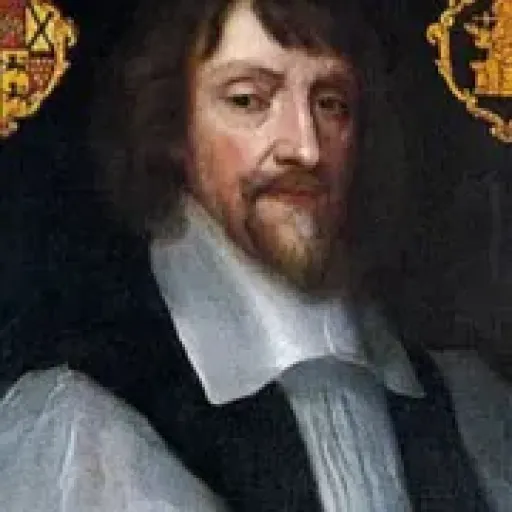
Henry King was an English poet and minister who rose to the position of Bishop of Chichester, following in his father’s footsteps. He was born in January 1592, the son of John King, Bishop of London. Such privileged family circumstances allowed him to receive a good education, starting at a fairly newly opened establishment in Thame, Oxfordshire called Lord Williams’s School. He went on to Westminster School before going up to Oxford to study at Christ Church College. King obtained his Bachelors’ degree in 1611 and then a Masters’ three years later. His career in the church began as a prebend at St Paul’s Cathedral in January 1616 and, the following year, he was made Archdeacon of Colchester. His progress in ecclesiastical circles was steady with a particular honour being his appointment as Chaplain in Ordinary to King James. He also had connections in literary society, being a good friend of the much revered metaphysical poet John Donne, also a church man. Other friends included Sir Henry Blount, Izaak Walton and Ben Jonson amongst other famous writers of the day. His elevation to the position of Bishop of Chichester in early 1642 coincided with unhappy times for the church, with Parliament decreeing that all bishops should lose their votes in the House of Lords. His episcopal palace in the Sussex town was seized, along with his valuable library. Other estates were also impounded as those with loyalties to the crown were severely dealt with. He was forced to spend the next few years living in Langley, Buckinghamshire at his brother-in-law’s house. King’s fortunes took a turn for the better when King Charles II took the throne in 1660, thus heralding the time of Restoration, and he returned once more to his position as Bishop of Chichester. Throughout the years of upheaval he had been a prolific writer, often engaged in the writing of elegies for royal personages. He also produced the same on his good friends Johnson and Donne. He was, though, never considered any more than a minor poet of his age, albeit a very good one. A collection of his work, under the title Poems and Psalms, was published in 1843. Perhaps his most famous piece of work was an elegy on his departed wife, Anne Berkeley, who he had married in 1617. She bore him six children, although only two of these survived infancy. It was only a short marriage of around seven years but he was clearly deeply affected by her passing. The result was a poem called The Exequy, written in the style of John Donne according to many literary historians. The final section of this piece is reproduced below: King’s close relationship with Donne, the Dean of St Paul’s, was highlighted when he was made executor of Donne’s affairs and he became responsible for the publishing of a number of sermons and poems written by the great man. Like many others of the time, these were very much amateur poets and King has been described as a man with Henry King died on the 30th September 1669 at the age of 77. His body was interred in Chichester Cathedral.
BRAVE flowers--that I could gallant it like you, And be as little vain! You come abroad, and make a harmless show, And to your beds of earth again.…
My best of friends! what needs a chain to tie One by your merit bound a Votarie? Think you I have some plot upon my peace, I would this bondage change for a release?…
Lightned by that dimme Torch our sorrow bears We sadly trace thy Coffin with our tears; And though the Ceremonious Rites are past Since thy fair body into earth was cast;…
For all the Ship-wracks, and the liquid graves Lost men have gain'd within the furrow'd waves, The Sea hath fin'd and for our wrongs paid use, When its wrought foam a Venus did pro…
Should we our Sorrows in this Method range, Oft as Misfortune doth their Subjects change, And to the sev'ral Losses which befall, Pay diff'rent Rites at ev'ry Funeral;…
I will not weep, for 'twere as great a sin To shed a tear for thee, as to have bin An Actor in thy death. Thy life and age Was but a various Scene on fortunes Stage,…
VVhether thy Fathers, or diseases rage, More mortal prov'd to thy unhappy age, Our sorrow needs not question; since the first Is known for length and sharpness much the worst.…
I envy not thy mortal triumphs, Death, (Thou enemy to Vertue as to Breath) Nor do I wonder much, nor yet complain The weekly numbers by thy arrow slain.…
Call for amazed thoughts, a wounded sense And bleeding Hearts at our Intelligence. Call for that Trump of Death the Mandrakes Groan Which kills the Hearers: This befits alone…
Like a cold fatal sweat which ushers death My thoughts hang on me, & my lab'ring breath Stopt up with sighs, my fancie big with woes, Feels two twinn'd mountains struggle in her th…
Let no profane ignoble foot tread neer This hallow'd peece of earth, Dorset lies here. A small sad relique of a noble spirit, Free as the air, and ample as his merit;…
This Pile thou seest built out of Flesh, not Stone, Contains no shroud within, nor mouldring bone: This bloodless Trunk is destitute of Tombe Which may the Soul-fled Mansion enwomb…
A prison is in all things like a grave, Where we no better priviledges have Then dead men, nor so good. The soul once fled Lives freer now, then when she was cloystered…
Out of the horrour of the lowest Deep, Where cares & endlesse fears their station keep, To thee (O Lord) I send my woful cry: O heare the accents of my misery.…
Hearken O God unto a Wretches cryes Who low dejected at thy footstool lies. Let not the clamour of my heinous sin Drown my requests, which strive to enter in…
15 / 75 gösteriliyor
Sana daha iyi bir okuma deneyimi sunabilmek için sitemizde çerez kullanıyoruz. Kişisel verilerin KVKK ve GDPR kapsamında işlenir; hangi çerezlere izin verdiğini dilediğin zaman değiştirebilirsin.