The King Of The Vasse
J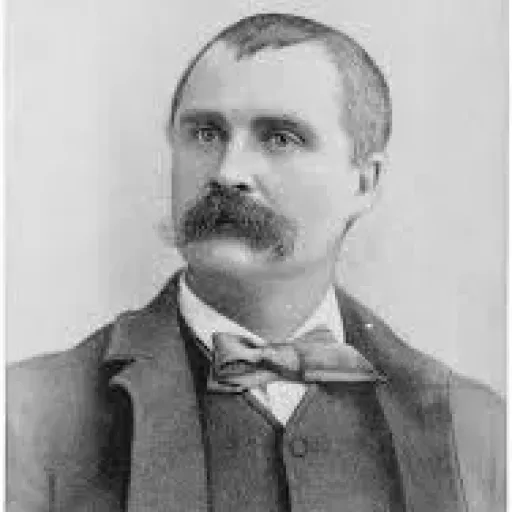 John Boyle O’Reilly
0
Altın Yaprak
A LEGEND OF THE BUSH.
MY tale which I have brought is of a time
Ere that fair Southern land was stained with crime,
Brought thitherward in reeking ships and cast
Like blight upon the coast, or like a blast
From angry levin on a fair young tree,
That stands thenceforth a piteous sight to see.
So lives this land to-day beneath the sun,—
A weltering plague-spot, where the hot tears run,
And hearts to ashes turn, and souls are dried
Like empty kilns where hopes have parched and died.
Woe's cloak is round her,—she the fairest shore
In all the Southern Ocean o'er and o'er.
Poor Cinderella! she must bide her woe,
Because an elder sister wills it so.
Ah! could that sister see the future day
When her own wealth and strength are shorn away,
A.nd she, lone mother then, puts forth her hand
To rest on kindred blood in that far land;
Could she but see that kin deny her claim
Because of nothing owing her but shame,—
Then might she learn 'tis building but to fall,
If carted rubble be the basement-wall.
But this my tale, if tale it be, begins
Before the young land saw the old land's sins
Sail up the orient ocean, like a cloud
Far-blown, and widening as it neared,—a shroud
Fate-sent to wrap the bier of all things pure,
And mark the leper-land while stains endure.
In the far days, the few who sought the West
Were men all guileless, in adventurous quest
Of lands to feed their flocks and raise their grain,
And help them live their lives with less of pain
Than crowded Europe lets her children know.
From their old homesteads did they seaward go,
As if in Nature's order men must flee
As flow the streams,—from inlands to the sea.
In that far time, from out a Northern land,
With home-ties severed, went a numerous band
Of men and wives and children, white-haired folk:
Whose humble hope of rest at home had broke,
As year was piled on year, and still their toil
Had wrung poor fee from -Sweden's rugged soil.
One day there gathered from the neighboring steads,
In Jacob Eibsen's, five strong household heads,—
Five men large-limbed and sinewed, Jacob's sons,
Though he was hale, as one whose current runs
In stony channels, that the streamlet rend,
But keep it clear and full unto the end.
Eight sons had Jacob Eibsen,—three still boys,
And these five men, who owned of griefs and joys
The common lot; and three tall girls beside,
Of whom the eldest was a blushing bride
One year before. Old-fashioned times and men,
And wives and maidens, were in Sweden then.
These five came there for counsel: they were tired
Of hoping on for all the heart desired;
And Jacob, old but mighty-thewed as youth,
In all their words did sadly own the truth,
And said unto them, 'Wealth cannot be found
In Sweden now by men who till the ground.
I've thought at times of leaving this bare place,
And holding seaward with a seeking face
For those new lands they speak of, where men thrive.
Alone .I've thought of this-; but now you five—
Five brother men of Eibsen blood—shall say
If our old stock from here must wend their way,
And seek a home where anxious sires can give
To every child enough whereon to live.'
Then each took thought in silence. Jacob gazed
Across them at the pastures worn and grazed
By ill-fed herds; his glance to corn-fields passed,
Where stunted oats, worse each year than the last,
And blighted barley, grew amongst the stones,
That showed ungainly, like earth's fleshless bones.
He sighed, and turned away. 'Sons, let me know
What think you?'
Each one answered firm, 'We go.'
And then they said, 'We want no northern wind
To chill us more, or driving hail to blind.
But let us sail where south winds fan the sea,
And happier we and all our race shall be.'
And so in time there started for the coast,
With farm and household gear, this Eibsen host;
And there, with others, to a good ship passed,
Which soon of Sweden's hills beheld the last.
I know not of their voyage, nor how they
Did wonder-stricken sit, as day by day,
'Neath tropic rays, they saw the smooth sea swell
And heave; while night by night the north-star fell,
Till last they watched him burning on the sea;
Nor how they saw, and wondered it could be,
Strange beacons rise before them as they gazed:
Nor how their hearts grew light when southward blazed
Five stars in blessed shape,—the Cross! whose flame
Seemed shining welcome as the wanderers came.
My story presses from this star-born hope
To where on young New Holland's western slope
These Northern-farming folk found homes at last,
And all their thankless toil seemed now long past.
Nine fruitful years chased over, and nigh all
Of life was sweet. But one dark dropp of gall
Had come when first they landed, like a sign
Of some black woe; and deep in Eibsen's wine
Of life it hid, till in the sweetest cup
The old man saw its shape come shuddering up.
And first it came in this wise: when their ship
Had made the promised land, and every lip
Was pouring praise for what the eye did meet,—
For all the air was yellow as with heat
Above the peaceful sea and dazzling sand
That wooed each other round the beauteous land,
Where inward stretched the slumbering forest's green,—
When first these sights from off the deck were seen,
There rose a wailing stern wards, and the men
Who dreamt of heaven turned to earth agen,
And heard the direful cause with bated breath,—
The land's first gleam had brought the blight of death!
The wife of Eibsen held her six-years' son,
Her youngest, and in secret best-loved one,
Close to her lifeless: his had been the cry
That first horizonwards bent every eye;
And from that opening sight of sand and tree
Like one deep spell-bound did he seem to be,
And moved by some strange phantasy; his eyes
Were wide distended as in glad surprise
At something there he saw; his arms reached o'er
The vessel's side as if to greet the shore,
And sounds came from his lips like sobs of joy.
A brief time so; and then the blue-eyed boy
Sank down convulsed, as if to him appeared
Strange sights that they saw not; and all afeard
Grew the late joyous people with vague dread;
And loud the mother wailed above her dead.
The ship steered in and found a bay, and then
The anchor plunged aweary-like: the men
Breathed breaths of rest at treading land agen.
Upon the beach by Christian men untrod
The wanderers kneeling offered up to God
The land's first-fruits; and nigh the kneeling band
The burdened mother sat upon the sand,
And still she wailed, not praying.
'Neath the wood
That lined the beach a crowd of watchers stood:
Tall men spear-armed, with skins like dusky night,
And aspect blended of deep awe and fright.
The ship that morn they saw, like some vast bird,
Come sailing toward their country; and they heard
The voices now of those strange men whose eyes
Were turned aloft, who spake unto the skies!
They heard and feared, not knowing, that first prayer,
But feared not when the wail arose, for there
Was some familiar thing did not appall,—
Grief, common heritage and lot of all.
They moved and breathed more freely at the cry,
And slowly from the wood, and timorously,
They one by one emerged upon the beach.
The white men saw, and like to friends did reach
Their hands unarmed; and soon the dusky crowd
Drew nigh and stood where wailed the mother loud.
They claimed her kindred, they could understand
That woe was hers and theirs; whereas the band
Of white-skinned men did not as brethren seem.
But now, behold! a man, whom one would deem
From eye and mien, wherever met, a King,
Did stand beside the woman. No youth's spring
Was in the foot that naked pressed the sand;
No warrior's might was in the long dark hand
That waved his people backward; no bright gold.
Of lace or armor glittered; gaunt and old,—
A belt, half apron, made of emu-down,
Upon his loins; upon his head no crown
Save only that which eighty years did trace
In whitened hair above his furrowed face.
Nigh nude he was: a short fur boka hung
In toga-folds upon his back, but flung
From his right arm and shoulder,—ever there
The spear-arm of the warrior is bare.
So stood he nigh the woman, gaunt and wild
But king-like, spearless, looking on the child
That lay with livid face upon her knees.
Thus long and fixed he gazed, as one who sees
A symbol hidden in a simple thing,
And trembles at its meaning: so the King
Fell trembling there, and from his breast there broke
A cry, part joy, part fear; then to his folk
With upraised hands he spoke one guttural word,
And said it over thrice; and when they heard,
They, too, were stricken with strange fear and joy.
The white-haired King then to the breathless boy
Drew closer still, while all the dusky crowd
In weird abasement to the earth were bowed.
Across his breast the aged ruler wore
A leathern thong or belt; whate'er it bore
Was hidden 'neath the boka. As he drew
Anigh the mother, from his side he threw
Far back the skin that made his rich-furred robe,
And showed upon the belt a small red globe
Of carven wood, bright-polished, as with years:
When this they saw, deep grew his people's fears,
And to the white sand were their foreheads pressed.
The King then raised his arms, as if he blest
The youth who lay there seeming dead and cold;
Then took the globe and oped it, and behold!
Within it, bedded in the carven case,
There lay a precious thing for that rude race
To hold, though it as God they seemed to prize, —
A Pearl of purest hue and wondrous size!
And as the sunbeams kissed it, from the dead
The dusk King looked, and o'er his snowy head
With both long hands he raised the enthroned gem,
And turned him toward the strangers: e'en on them
Before the lovely Thing, an awe did fall
To see that worship deep and mystical,
That King with upraised god, like rev' rent priest
With elevated Host at Christian feast.
Then to the mother turning slow, the King
Took out the Pearl, and laid the beauteous Thing
Upon the dead boy's mouth and brow and breast,
And as it touched him, lo! the awful rest
Of death was broken, and the youth uprose!
* * * * * * *
Nine years passed over since on that fair shore
The wanderers knelt,—but wanderers they no more.
With hopeful hearts they bore the promise-pain
Of early labor, and soon bending grain
And herds and homesteads and a teeming soil
A thousand-fold repaid their patient toil.
Nine times the sun's high glory glared above,
As if his might set naught on human love,
But yearned to scorn and scorch the things that grew
On man's poor home, till all the forest's hue
Of blessed green was burned to dusty brown;
And still the ruthless rays rained fiercely down,
Till insects, reptiles, shriveled as they lay,
And piteous cracks, like lips, in parching clay
Sent silent pleadings skyward,—as if she,
The fruitful, generous mother, plaintively
Did wail for water. Lo! her cry is heard,
And swift, obedient to the Ruler's word,
From Southern Iceland sweeps the cool sea breeze,
To fan the earth and bless the suffering trees,
And bear dense clouds with bursting weight of rain
To soothe with moisture all the parching pain.
Oh, Mercy's sweetest symbol! only they
Who see the earth agape in burning day,
Who watch its living things thirst-stricken lie,
And turn from brazen heaven as they die,—
Their hearts alone, the shadowy cloud can prize
That veils the sun,—as to poor earth-dimmed eyes
The sorrow comes to veil our joy's dear face,
All rich-in mercy and in God's sweet grace!
Thrice welcome, clouds from seaward, settling down
O'er thirsting nature! Now the trees' dull brown
Is washed away, and leaflet buds appear,
And youngling undergrowth, and far and near
The bush is whispering in her pent-up glee,
As myriad roots bestir them to be free,
And drink the soaking moisture; while bright heaven
Shows clear, as inland are the spent clouds driven;
And oh! that arch, that sky's intensate hue!
That deep, God-painted, unimagined blue
Through which the golden sun now smiling sails,
And sends his love to fructify the vales
That late he seemed to curse! Earth throbs and heaves
With pregnant prescience of life and leaves;
The shadows darken 'neath the tall trees' screen,
While round their stems the rank and velvet green
Of undergrowth is deeper still; and there,
Within the double shade and steaming air,
The scarlet palm has fixed its noxious root,
And hangs the glorious poison of its fruit;
And there, 'mid shaded green and shaded light,
The steel-blue silent birds take rapid flight
From earth to tree and tree to earth; and there
The crimson-plumaged parrot cleaves the air
Like flying fire, and huge brown owls awake
To watch, far down, the stealing carpet snake,
Fresh-skinned and glowing in his changing dyes,
With evil wisdom in the cruel eyes
That glint like gems as o'er his head flits by
The blue-black armor of the emperor-fly;
And all the humid earth displays its powers
Of prayer, with incense from the hearts of flowers
That load the air with beauty and with wine
Of mingled color, as with one design
Of making there a carpet to be trod,
In woven splendor, by the feet of God!
And high o'erhead is color: round and round
The towering gums and tuads, closely wound
Like cables, creep the climbers to the sun,
And over all the reaching branches run
And hang, and still send shoots that climb and wind
Till every arm and spray and leaf is twined,
And miles of trees, like brethren joined in love,
Are drawn and laced; while round them and above,
When all is knit, the creeper rests for days
As gathering might, and then one blinding blaze
Of very glory sends, in wealth and strength,
Of scarlet flowers o'er the forest's length!
Such scenes as these have subtile power to trace
Their clear-lined impress on the mind and face;
And these strange simple folk, not knowing why,
Grew more and more to silence; and the eye,
The quiet eye of Swedish gray, grew deep
With listening to the solemn rustling sweep
From wings of Silence, and the earth's great psalm
Intoned forever by the forest's calm.
But most of all was younger Jacob changed:
From morn till night, alone, the woods he ranged,
To kindred, pastime, sympathy estranged.
Since that first day of landing from the ship
When with the Pearl on brow and breast and lip
The aged King had touched him and he rose,
His former life had left him, and he chose
The woods as home, the wild, uncultured men
As friends and comrades. It were better then,
His brethren said, the boy had truly died
Than they should live to be by him denied,
As now they were. He lived in somber mood,
He spoke no word to them, he broke no food
That they did eat: his former life was dead,—
The soul brought back was not the soul that fled!
'Twas Jacob's form and feature, but the light
Within his eyes was strange unto their sight.
His mother's grief was piteous to see;
Unloving was he to the rest, but she
Held undespairing hope that deep within
Her son's changed heart was love that she might win
By patient tenderness; and so she strove
For nine long years, but won no look of love!
At last his brethren gazed on him with awe,
And knew untold that from the form they saw
Their brother's gentle mind was sure dispelled,
And now a gloomy savage soul it held.
From that first day, close intercourse he had
With those who raised him up,—fierce men, unclad,
Spear-armed and wild, in all their ways uncouth,
And strange to every habit of his youth.
His food they brought, his will they seemed to crave,
The wildest bushman tended like a slave;
He worked their charms, their hideous chants he sung;
Though dumb to all his own, their guttural tongue
He often spoke in tones of curt command,
And kinged it proudly o'er the dusky band.
And once each year there gathered from afar
A swarming host, as if a sudden war
Had called them forth, and with them did they bring
In solemn, savage pomp the white-haired King,
Who year by year more withered was and weak;
And he would lead the youth apart and speak
Some occult words, and from the carven case
Would take the Pearl and touch the young man's face,
And hold it o'er him blessing; while the crowd,
As on the shore, in dumb abasement bowed.
And when the King had closed the formal rite,
The rest held savage revelry by night,
Round blazing fires, with dance and orgies base,
That roused the sleeping echoes of the place,
Which down the forest vistas moaned the din,
Like spirits pure beholding impious sin.
Nine times they gathered thus; but on the last
The old king's waning life seemed well-nigh past.
His feeble strength had failed: he walked no more,
But on a woven spear-wood couch they bore
With careful tread the form that barely gasped,
As if the door of death now hung unhasped,
Awaiting but a breath to swing, and show
The dim eternal plain that stretched below.
The tenth year waned: the cloistered bush was stilled,
The earth lay sleeping, while the clouds distilled
In ghostly veil their blessing. Thin and white,
Through opening trees the moonbeams cleft the night,
And showed the somber arches, taller far
Than grandest aisles of built cathedrals are.
And up those dim-lit aisles in silence streamed
Tall men with trailing spears, until it seemed,
So many lines converged of endless length,
A nation there was gathered in its strength.
Around one spot was kept a spacious ring,
Where lay the body of the white-haired King,
Which all the spearmen gathered to behold
Upon its spear-wood litter, stiff and cold.
All naked, there the dusky corse was laid
Beneath a royal tuad's mourning shade;
Upon the breast was placed the carven case
That held the symbol of their ancient race,
And eyes awe-stricken saw the mystic Thing
That soon would clothe another as their King!
The midnight moon was high and white o'erhead,
And threw a ghastly pallor round the dead
That heightened still the savage pomp and state
In which they stood expectant, as for Fate
To move and mark with undisputed hand
The one amongst them to the high command.
And long they stood unanswered; each on each
Had looked in vain for motion or for speech:
Unmoved as ebon statues, grand and tall,
They ringed the shadowy circle, silent all.
Then came a creeping tremor, as a breeze
With cooling rustle moves the summer trees
Before the thunder crashes on the ear;
The dense ranks turn expectant, as they hear
A sound, at first afar, but nearing fast;
The outer crowd divides, as waves are cast
On either side a tall ship's cleaving bow,
Or mold is parted by the fearless plow
That leaves behind a passage clear and broad:
So through the murmuring multitude a road
Was cleft with power, up which in haughty swing
A figure stalking broke the sacred ring.
And stood beside the body of the King!
'Twas Jacob Eibsen, sad and gloomy-browed,
Who bared his neck and breast, one moment bowed
Above the corse, and then stood proud and tall,
And held the carven case before them all!
A breath went upward like a smothered fright
From every heart, to see that face, so white,
So foreign to their own, but marked with might
From source unquestioned, and to them divine;
Whilst he, the master of the mystic sign,
Then oped the case and took the Pearl and raised,
As erst the King had done, and upward gazed,
As swearing fealty to God on high!
But ere the oath took form, there thrilled a cry
Of shivering horror through the hush of night;
And there before him, blinded by the sight
Of all his impious purpose, brave with love,
His mother stood, and stretched her arms above
To tear the idol from her darling's hand;
But one fierce look, and rang a harsh command
In Jacob's voice, that smote her like a sword.
A thousand men sprang forward at the word,
To tear the mother from the form of stone,
And cast her forth; but, as he stood alone,
The keen, heart-broken wail that cut the air
Went two-edged through him, half reproach, half prayer.
But all unheeding, he nor marked her cry
By sign or look within the gloomy eye;
But round his body bound the carven case,
And swore the fealty with marble face.
As fades a dream before slow-waking sense,
The shadowy host, that late stood fixed and dense,
Began to melt; and as they came erewhile,
The streams flowed backward through each moonlit aisle;
And soon he stood alone within the place,
Their new-made king,—their king with pallid face,
Their king with strange foreboding and unrest,
And half-formed thoughts, like dreams, within his breast.
Like Moses' rod, that mother's cry of woe
Had struck for water; but the fitful flow
That weakly welled and streamed did seem to mock
Before it died forever on the rock.
The sun rose o'er the forest, and his light
Made still more dreamlike all the evil night.
Day streamed his glory down the aisles' dim arch,
All hushed and shadowy like a pillared church;
And through the lonely bush no living thing
Was seen, save now and then a garish wing
Of bird low-flying on its silent way.
But woeful searchers spent the weary day
In anxious dread, and found not what they sought,—
Their mother and their brother: evening brought
A son and father to the lonesome place
That saw the last night's scene; and there, her face
Laid earthward, speaking dumbly to her heart,
They found her, as the hands that tore apart
The son and mother flung her from their chief,
And with one cry her heart had spent its grief.
They bore the cold earth that so late did move
In household happiness and works of love,
Unto their rude home, lonely now; and he
Who laid her there, from present misery
Did turn away, half-blinded by his tears,
To see with inward eye the far-off years
When Swedish toil was light and hedgerows sweet;
Where, when the toil was o'er, he used to meet
A simple gray-eyed girl, with sun-browned face,
Whose love had won his heart, and whose sweet grace
Had blessed for threescore years his humble life.
So Jacob Eibsen mourned his faithful wife,
And found the world no home when she was gone.
The days that seemed of old to hurry on
Now dragged their course, and marred the wish that grew,
When first he saw her grave, to sleep there too.
But though to him, whose yearning hope outran
The steady motion of the seasons' plan,
The years were slow in coming, still their pace
With awful sureness left a solemn trace,
Like dust that settles on an open page,
On Jacob Eibsen's head, bent down with age;
And ere twice more the soothing rains had come,
The old man had his wish, and to his home,
Beneath the strange trees' shadow where she lay,
They bore the rude-made bier; and from that day,
When round the parent graves the brethren stood,
Their new-made homesteads were no longer good,
But marked they seemed by some o'erhanging dread
That linked the living with the dreamless dead.
Grown silent with the woods the men were all,
But words were needed not to note the pall
That each one knew hung o'er them. Duties now,
With straying herds or swinging scythe, or plow,
Were cheerless tasks: like men they were who wrought
A weary toil that no repayment brought.
And when the seasons came and went, and still
The pall was hanging o'er them, with one will
They yoked their oxen teams and piled the loads
Of gear selected for the aimless roads
That nature opens through the bush; and when
The train was ready, women-folk and men
Went over to the graves and wept and prayed,
Then rose and turned away, but still delayed
Ere leaving there forever those poor mounds.
The next bright sunrise heard the teamsters' sounds
Of voice and whip a long day's march away;
And wider still the space grew day by day
From their old resting-place: the trackless wood
Still led them on with promises of good,
As when the mirage leads a thirsty band
With palm-tree visions o'er the arid sand.
I Snow not where they settled down at last:
Their lives and homes from out my tale have passed,
And left me naught, or seeming naught, to trace
But cheerless record of the empty place,
Where long unseen the palm-thatched cabins stood,
And made more lonely still the lonesome wood.
Long lives of men passed over; but the years
That line men's faces with hard cares and tears,
Pass lightly o'er a forest, leaving there
No wreck of young disease or old despair;
For trees are mightier than men, and Time,
When left by cunning Sin and dark-browed Crime
To work alone, hath ever gentle mood.
Unchanged the pillars and the arches stood,
But shadowed taller vistas; and the earth,
That takes and gives the ceaseless death and birth,
Was blooming still, as once it bloomed before
When sea-tired eyes beheld the beauteous shore.
But man's best work is weak, nor stands nor grows
Like Nature's simplest. Every breeze that blows,
Health-bearing to the forest, plays its part
In hasting graveward all his humble art.
Beneath the trees the cabins still remained,
By all the changing seasons seared and stained;
Grown old and weirdlike, as the folk might grow
In such a place, who left them long ago.
Men came, and wondering found the work of men
Where they had deemed them first. The savage then
Heard through the wood the axe's death watch stroke
For him and all his people: odorous smoke
Of burning sandal rose where white men dwelt,
Around the huts; but they had shuddering felt
The weird, forbidden aspect of the spot,
And left the place untouched to mold and rot.
The woods grew blithe with labor: all around,
From point to point, was heard the hollow sound,
The solemn, far-off clicking on the ear
That marks the presence of the pioneer.
And children came like flowers to bless the toil
That reaped rich fruitage from the virgin soil;
And through, the woods they wandered fresh and fair,
To feast on all the beauties blooming there.
But always did they shun the spot where grew,
From earth once tilled, the flowers of rarest hue.
There wheat grown wild in rank luxuriance spread,
And fruits grown native; but a sudden tread
Or bramble's fall would foul goanos wake,
Or start the chilling rustle of the snake;
And diamond eyes of these and thousand more
Gleamed out from ruined roof and wall and floor.
The new-come people, they whose axes rung
Throughout the forest, spoke the English tongue,
And never knew that men of other race
From Europe's fields had settled in the place;
But deemed these huts were built some long-past day
By lonely seamen who were cast away
And thrown upon the coast, who there had built
Their homes, and lived until some woe or guilt
Was bred among them, and they fled the sight
Of scenes that held a horror to the light.
But while they thought such things, the spell that hung,
And cast its shadow o'er the place, was strung
To utmost tension that a breath would break,
And show between the rifts the deep blue lake
Of blessed peace,—as next to sorrow lies
A stretch of rest, rewarding hopeful eyes.
And while such things bethought this 'new-come folk,
That breath was breathed, the olden spell was broke:
From far away within the unknown land,
O'er belts of forest and o'er wastes of sand,
A cry came thrilling, like a cry of pain
From suffering heart and half-awakened brain;
As one thought dead who wakes within the tomb,
And, reaching, cries for sunshine in the gloom.
In that strange country's heart, whence comes the breath
Of hot disease and pestilential death,
Lie leagues of wooded swamp, that from the hills
Seem stretching meadows; but the flood that fills
Those valley-basins has the hue of ink,
And dismal doorways open on the brink,
Beneath the gnarled arms of trees that grow
All leafless to the top, from roots below
The Lethe flood; and he who enters there
Beneath their screen sees rising, ghastly-bare,
Like mammoth bones within a charnel dark,
The white and ragged stems of paper-bark,
That drip down moisture with a ceaseless drip,
From lines that run like cordage of a ship;
For myriad creepers struggle to the light,
And twine and mat o'erhead in murderous fight
For life and sunshine, like another race
That wars on brethren for the highest place.
Between the water and the matted screen,
The baldhead vultures, two and two, are seen
In dismal grandeur, with revolting face
Of foul grotesque, like spirits of the place;
And now and then a spear-shaped wave goes by,
Its apex glittering with an evil eye
That sets above its enemy and prey,
As from the wave in treacherous, slimy way
The black snake winds, and strikes the bestial bird,
Whose shriek-like wailing on the hills is heard.
Beyond this circling swamp, a circling waste
Of baked and barren desert land is placed,—
A land of awful grayness, wild and stark,
Where man will never leave a deeper mark,
On leagues of fissured clay and scorching stones,
Than may be printed there by bleaching bones.
Within this belt, that keeps a savage guard,
As round a treasure sleeps a dragon ward,
A forest stretches far of precious trees;
Whence came, one day, an odor-laden breeze
Of jam-wood bruised, and sandal sweet in smoke.
For there long dwelt a numerous native folk
In that heart-garden of the continent,—
There human lives with aims and fears were spent,
And marked by love and hate and peace and pain,
And hearts well-filled and hearts athirst for gain,
And lips that clung, and faces bowed in shame;
For, wild or polished, man is still the same,
And loves and hates and envies in the wood,
With spear and boka and with manners rude,
As loves and hates his brother shorn and sleek,
Who learns by lifelong practice how to speak
With oily tongue, while in his heart below
Lies rankling poison that he dare not show.
Afar from all new ways this people dwelt,
And knew no books, and to no God had knelt,
And had no codes to rule them writ in blood;
But savage, selfish, nomad-lived and rude,
With human passions fierce from unrestraint,
And free as their loose limbs; with every taint
That earth can give to that which God has given;
Their nearest glimpse of Him, o'er-arching heaven,
Where dwelt the giver and preserver,—Light,
Who daily slew and still was slain by Night.
A savage people they, and prone to strife;
Yet men grown weak with years had spent a life
Of peace unbroken, and their sires, long dead,
Had equal lives of peace unbroken led.
It was no statute's bond or coward fear
Of retribution kept the shivering spear
In all those years from fratricidal sheath;
But one it was who ruled them,—one whom Death
Had passed as if he saw not,—one whose word
Through all that lovely central land was heard
And bowed to, as of yore the people bent,
In desert wanderings, to a leader sent
To guide and guard them to a promised land.
O'er all the Austral tribes he held command,—
A man unlike them and not of their race,
A man of flowing hair and pallid face,
A man who strove by no deft juggler's art
To keep his kingdom in the people's heart,
Nor held his place by feats of brutal might
Or showy skill, to please the savage sight;
But one who ruled them as a King of kings,
A man above, not of them,—one who brings,
To prove his kingship to the low and high,
The inborn power of the regal eye.
Like him of Sinai with the stones of law,
Whose people almost worshiped when they saw
The veiled face whereon God's glory burned;
But yet who, mutable as water, turned
From that veiled ruler who had talked with God,
To make themselves an idol from a clod:
So turned one day this savage Austral race
Against their monarch with the pallid face.
The young men knew him not, the old had heard
In far-off days, from men grown old, a word
That dimly lighted up the mystic choice
Of this their alien King,—how once a voice
Was heard by their own monarch calling clear,
And leading onward, where as on a bier
A dead child lay upon a woman's knees;
Whom when the old King saw, like one who sees
Far through the mist of common life, he spoke
And touched him with the Pearl, and he awoke,
And from that day the people owned his right
To wear the Pearl and rule them, when the light
Had left their old King's eyes. But now, they said,
The men who owned that right were too long dead;
And they were young and strong and held their spears
In idle resting through this white King's fears,
Who still would live to rule them till they changed
Their men to puling women, and estranged
To Austral hands the spear and coila grew.
And so they rose against him, and they slew
The white-haired men who raised their hands to warn,
And true to ancient trust in warning fell,
While o'er them rang the fierce revolters' yell.
Then midst the dead uprose the King in scorn,
Like some strong, hunted thing that stands at bay
To win a brief but desperate delay.
A moment thus, and those within the ring
'Gan backward press from their unarmed King,
Who swept his hand as though he bade them fly,
And brave no more the anger of his eye.
The heaving crowd grew still before that face,
And watched him take the ancient carven case,
And ope it there, and take the Pearl and stand
As once before he stood, with upraised hand
And upturned eyes of inward worshiping.
Awe-struck and dumb, once more they owned him King,
And humbly crouched before him; when a sound,
A whirring sound that thrilled them, passed o'erhead,
And with a spring they rose. a spear had sped
With aim unerring and with deathful might,
And split the awful center of their sight,—
The upraised Pearl! A moment there it shone
Before the spear-point,—then forever gone!
* * * * * * *
The spell that long the ruined huts did shroud
Was rent and scattered, as a hanging cloud
In moveless air is torn and blown away
By sudden gust uprising; and one day
When evening's lengthened shadows came to hush
The children's voices, and the awful bush
Was lapt in somber stillness, and on high
Above the arches stretched the frescoed sky,—
When all the scene such chilling aspect wore
As marked one other night long years before,
When through the reaching trees the moonlight shone
Upon a prostrate form, and o'er it one
With kingly gesture. Now the light is shed
No more on youthful brow and daring head,
But on a man grown weirdly old, whose face
Keeps turning ever to some new-found place
That rises up before him like a dream;
And not unlike a dreamer does he seem,
Who might have slept, unheeding time's sure flow,
And woke to find a world he does not know.
His long white hair flows o'er a form low bowed
By wondrous weight of years: he speaks aloud
In garbled Swedish words, with piteous wist,
As long-lost objects rise through memory's mist.
Again and once again his pace he stays,
As crowding images of other days
Loom up before him dimly, and he sees
A vague, forgotten friendship in the trees
That reach their arms in welcome; but agen
These olden glimpses vanish, and dark men
Are round him, dumb and crouching, and he stands
With guttural sentences and upraised hands,
That hold a carven case,—but empty now,
Which makes more pitiful the aged brow
Full-turned to those tall tuads that did hear
A son's fierce mandate and a mother's prayer.
Ah, God! what memories can live of these,
Save only with the half-immortal trees
That saw the death of one, the other lost!
The weird-like figure now the bush has crost
And stands within the ring, and turns and moans,
With arms out-reaching and heart-piercing tones,
And groping hands, as one a long time blind
Who sees a glimmering light on eye and mind.
From tree to sky he turns, from sky to earth,
And gasps as one to whom a second birth
Of wondrous meaning is an instant shown.
Who is this wreck of years, who all alone,
In savage raiment and with words unknown,
Bows down like some poor penitent who fears
The wrath of God provoked?—this man who hears
Around him now, wide circling through the wood,
The breathing stillness of a multitude?
Who catches dimly through his straining sight
The misty vision of an impious rite?
Who hears from one a cry that rends his heart,
And feels that loving arms are torn apart,
And by his mandate fiercely thrust aside?
Who is this one who crouches where she died,
With face laid earthward as her face was laid,
And prays for her as she for him once prayed?
'Tis Jacob Eibsen, Jacob Eibsen's son,
Whose occult life and mystic rule are done,
And passed away the memory from his brain.
'Tis Jacob Eibsen, who has come again
To roam the woods, and see the mournful gleams
That flash and linger of his old-time dreams.
The morning found him where he sank to rest
Within the mystic circle: on his breast
With withered hands, as to the dearest place,
He held and pressed the empty carven case.
That day he sought the dwellings of his folk;
And when he found them, once again there broke
The far-off light upon him, and he cried
From that wrecked cabin threshold for a guide
To lead him, old and weary, to his own.
And surely some kind spirit heard his moan,
And led him to the graves where they were laid.
The evening found him in the tuads' shade,
And like a child at work upon the spot
Where they were sleeping, though he knew it not.
Next day the children found him, and they gazed
In fear at first, for they were sore amazed
To see a man so old they never knew,
Whose garb was savage, and whose white hair grew
And flowed upon his shoulders; but their awe
Was changed to love and pity when they saw
The simple work he wrought at; and they came
And gathered flowers for him, and asked his name,
And laughed at his strange language; and he smiled
To hear them laugh, as though himself a child.
Ere that brief day was o'er, from far and near
The children gathered, wondering; and though fear
Of scenes a long time shunned at first restrained,
The spell was broken, and soon naught remained
But gladsome features,, where of old was dearth
Of happy things and cheery sounds of mirth.
The lizards fled, the snakes and bright-eyed things
Found other homes, where childhood never sings;
And all because poor Jacob, old and wild,
White-haired and fur-clad, was himself a child.
Each day he lived amid these scenes, his ear
Heard far-off voices growing still more clear;
And that dim light that first he saw in gleams
Now left him only in his troubled dreams.
From far away the children loved to come
And play and work with Jacob at his home.
He learned their simple words with childish lip,
And told them often of a white-sailed ship
That sailed across a mighty sea, and found
A beauteous harbor, all encircled round
With flowers and tall green trees; but when they asked
What did the shipmen then, his mind was tasked
Beyond its strength, and Jacob shook his head,
And with them laughed, for all he knew was said.
The brawny sawyers often ceased their toil,
As Jacob with the children passed, to smile
With rugged pity on their simple play;
Then, gazing after the glad group, would say
How strange it was to see that snowy hair
And time-worn figure with the children fair.
So Jacob Eibsen lived through years of joy,—
A patriarch in age, in heart a boy.
Unto the last he told them of the sea
And white-sailed ship; and ever lovingly,
Unto the end, the garden he had made
He tended daily, 'neath the tuads' shade.
But one bright morning, when the children came
And roused the echoes calling Jacob's name,
The echoes only answered back the sound.
They sought within the huts, but nothing found
Save loneliness and shadow, falling chill
On every sunny searcher: boding ill,
They tried each well-known haunt, and every throat
Sent far abroad the bush man's cooing note.
But all in vain their searching: twilight fell,
And sent them home their sorrowing tale to tell.
That night their elders formed a torch-lit chain
To sweep the gloomy bush; and not in vain,—
For when the moon at midnight hung o'erhead,
The weary searchers found poor Jacob—dead!
He lay within the tuad ring, his face
Laid earthward on his hands; and all the place
Was dim with shadow where the people stood.
And as they gathered there, the circling wood
Seemed filled with awful whisperings, and stirred
By things unseen; and every bushman heard,
From where the corse lay plain within their sight,
A woman's heart-wail rising on the night.
For over all the darkness and the fear
That marked his life from childhood, shining clear,
An arch, like God's bright rainbow, stretched above,
And joined the first and last,—his mother's love.
They dug a grave beneath the tuads' shade,
Where all unknown to them the bones were laid
Of Jacob's kindred; and a prayer was said
In earnest sorrow for the unknown dead,
Hound which the children grouped.
Upon the breast
The hands were folded in eternal rest;
But still they held, as dearest to that place
Where life last throbbed, the empty carven case.
Kamu malı: şairin ölümünün üzerinden 70 yıldan fazla geçti.
Bu şiiri puanla
Henüz puan verilmemiş