İngilizce
That blessings lost, though hard to bear, Are light when weighed with carking care, - Some ill whose ever-goading spite Affects us morning, noon, and night, -…
Aramak için en az iki harf yaz.
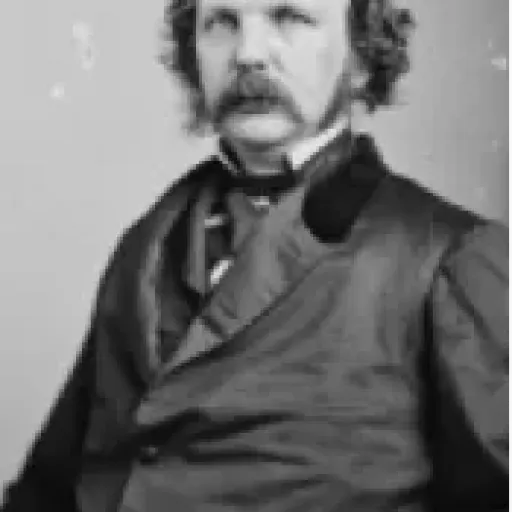
John Godfrey Saxe was a mostly satirical 19th century American poet and would-be politician. He tried twice to be elected to the position of Governor of his home state of Vermont, but failed twice. It was thought that his stance on slavery – he advocated a controversial policy of non-interference – almost certainly led to his downfall on both occasions. Most people in Vermont were very much Republican in their views while Saxe was a Democrat. After his second defeat he felt it advisable to move to Albany, New York. His poetry gained him a lot of favour though. It was sometimes described as “rollicking” while at other times he displayed a gentler, more introspective style. He was born in the Vermont town of Highgate on the 2nd June 1816 and grew up in the settlement called Saxe’s Mills which dated back to his German immigrant grandfather’s arrival. His ancestor took the name John Saxe, an Americanisation of his German name Johannes Sachse. It was a strictly Methodist upbringing and his first schooling was at a Wesleyan establishment. He studied law at Middlebury and, having been accepted at the Vermont bar in 1843, he went into business with his older brother Charles who was described as “dutiful and pious”. John soon grew tired of legal work and pursued a writing career, getting poems such as The Rhyme of the Rail published in The Knickerbocker. His verse soon attracted the attention of a Boston publisher and his first volume of poetry was extremely successful. The author, for some reason, earned no royalties from this book despite it outselling works by Tennyson and Hawthorne. He wrote a great deal during the 1850s and was much in demand as a public speaker. Work by John Godfrey Saxe appeared in Albany newspapers and publications such as The Atlantic and Harpers’ magazine. Examples of popular work at this time were The Proud Miss McBride and Song of Saratoga but his most famous piece is now considered to be an adaptation of an old Indian parable called The Blind Men and the Elephant. It is a touching story of how we perceive things that we have never seen. It describes the reaction of six blind men who touch different parts of a live elephant having no idea what it is and, of course, having never seen one. Here is the poem in full: The 1870s were an incredibly tragic time for Saxe. He lost five of his six daughters to tuberculosis and then his wife died following a cranial bleed caused, no doubt, by the stress of losing nearly all of her children in such tragic circumstances. He, himself, had an accident in 1875 on the railway which caused him to sustain serious head injuries and it is thought that he never fully recovered from that. Earlier he had lost a son as well so it is not surprising to find that he slipped deeper and deeper into a state of depression. He lived out the rest of his life with his only remaining child, Charles, in Albany. John Godfrey Saxe died on the 31st March 1887, aged 70.
That blessings lost, though hard to bear, Are light when weighed with carking care, - Some ill whose ever-goading spite Affects us morning, noon, and night, -…
NAY, weep not, dearest, though the child be dead; He lives again in Heaven's unclouded life, With other angels that have early fled From these dark scenes of sorrow, sin, and strif…
Do I love thee? Ask the bee If she loves the flowery lea, Where the honeysuckle blows And the fragrant clover grows.…
"GOD bless the man who first invented sleep!" So Sancho Panza said, and so say I: And bless him, also, that he didn't keep His great discovery to himself; nor try…
COME, listen all unto my song; It is no silly fable; 'T is all about the mighty cord They call the Atlantic Cable.…
There's a clever classic story, Such as poets used to write, (You may find the tale in Ovid), That the Raven once was white.…
My days pass pleasantly away; My nights are blest with sweetest sleep; I feel no symptoms of decay; I have no cause to mourn nor weep;…
I know, Justine, you speak me fair As often as we meet; And 'tis a luxury, I swear, To hear a voice so sweet;…
A Tale of the Talmud When Solomon was reigning in his glory, Unto his throne the Queen of Sheba came,…
Should you e'er go to France- as of course you intend- (Though the Great Exposition is now at an end), And in Paris should stroll- as I'm certain you will- In the Gardens adorned w…
Love and Lucre met one day, In chill November weather, And so, to wile the time away, They held discourse together.…
A maiden, with a garland on her head, Sat in her bower between two lovers: one Wore such a wreath as hers; the other none. But him, in merry wise, she garlanded…
SINGING through the forests, Rattling over ridges, Shooting under arches, Rumbling over bridges,…
Dum tacent clamant INGLORIOUS friend! most confident I am Thy life is one of very little ease;…
Dum tacent clamant INGLORIOUS friend! most confident I am Thy life is one of very little ease;…
15 / 23 gösteriliyor
Sana daha iyi bir okuma deneyimi sunabilmek için sitemizde çerez kullanıyoruz. Kişisel verilerin KVKK ve GDPR kapsamında işlenir; hangi çerezlere izin verdiğini dilediğin zaman değiştirebilirsin.