Ruins At Pæstum
J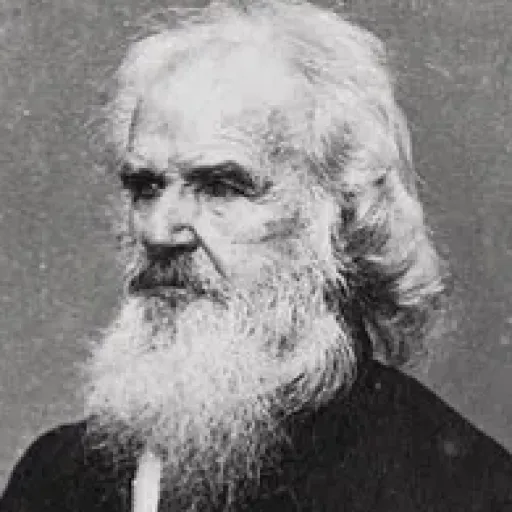 John Pierpont
0
Altın Yaprak
Call ye these "ruins"? What is ruined here?
What fallen shaft,--what broken capital,--
What architraves or friezes, scattered round,--
What leaning walls, with ivy overrun,
Or forced asunder by the roots of trees,
That have struck through them, tell you here was once
A finished temple,--now o'erthrown by time?
Seems it not, rather, a majestic fane,
Now going up, in honor of some god,
Whose greatness or whose beauty had impressed
The builder's soul with reverence profound
And an entire devotion? It is true,
No tools of architects are seen around,
Compass, or square, or plummet with its line;
Else, one might argue that the artisans
Had gone to dinner, and would soon return,
To carry on the work they had begun,
And, thus far, done so well. Yet, long ago,
The laborers who hewed these massy blocks,
And laid them where they lie; who grooved these shafts
To such a depth, and with such perfect truth,
Were called off from their work; not called, indeed,
With sweating brow, to eat their daily bread;
But to lie down in the long sleep of death,
To rest from all their labors, and to mix
Their own dust with the dust that autumn's blasts
Or summer's whirlwind drives across this plain,
And through these voiceless temples, that now stand,
Their only, their mysterious monument.
Mysterious? Ay; for, if ye ask what age
Beheld these temples rise, or in what tongue
The service was performed, or to what god
This fane or that was dedicate, no name,
Inscribed along the architrave, records
By whom, or to whom, wherefore built, or when.
And, if ye ask the Muse of History,
"Non mi ricordo," is her sole reply.
Tradition, too, that prates of all things else,
Is silent as to this. One only ray
Shoots through the darkness that broods o'er these fanes;
But that is not more worthy of our trust,
Than is the ignis fatuus that, at times,
Swims doubtfully by night across this plain,
Seeking, not finding rest. It is the ray
Thrown from the lamp of Logic, reasoning thus:
She has been told that Pæstum's ancient name
Was Posidonia. She has also learned
That, by the Greeks, old Neptune, ocean's god,
Was called Poseidon. "Ergo," says the dame,
Who, from slight data, draws conclusions grave,
"Pæstum was Neptune's city; and the fane
That, in its grandeur and magnificence,
Excels the rest, must have been Neptune's temple."
But wherefore Neptune's? Standing on this plain,
That stretches seaward for a league or more,
These massy columns never could have seen
Themselves reflected from the glassy wave,
When it lay sleeping on the nearest shore;
Nor could the surge, when lifted by the storm,
Have ever fallen, and bathed their feet in foam.
Nor could old ocean's monarch, while he dwelt
Within his own domains, have e'er beheld
The votive gifts suspended on these walls,
Or heard the prayers or praises offered here;
Unless, indeed, the zealous worshipper
Had, with a trumpet, called upon his god,
And spoken in thunders louder than his own;
Or,--which is far from probable,--unless
The god had taken a carriage at the beach,
And been set down here at his own expense,
Whene'er he wished to show his peaceful head
To those who bowed in worship at his shrine.
I 've seen seven columns, standing now at Corinth,
On five of which,--for two bear nothing up,--
Some portion of the entablature remains;
And that old ruin the same style displays
Of severe Doric beauty, that prevails
In these grave works of hoar antiquity.
But to what god rose the Corinthian fane,
Or when, or by what architect, 't was reared,
How much below the time of Sisyphus,
Who laid the corner-stone of Corinth's state,
How much above the era of Timoleon,
Whom that proud state commissioned to dethrone
The tyrant Dionysius, and convey
A Grecian colony to Syracuse,--
'T is all unknown. The ruins there, and here,
Of the same genius speak, and the same age;
And in the same oblivion both have slept
For more than two millenniums. Roman bards
Have of the rosaries of Pæstum sung,
Twice blooming in a year. And he who first
Held in his hands the empire of the world,--
Augustus Cæsar,--visited this spot,
As I do now, to muse among these columns,
Of times whose works remain, whose history 's lost.
And yet the palace of that same Augustus,
Built, as you know, upon the Palatine,
With all that Rome could do to hold it up
Beneath the pressure of the hand of Time,
Is now all swept away, even to the floor.
This little piece of marble, jaune antique,--
Which now I use, to keep these Sibyl leaves
(As she of Cumæ cared not to keep hers)
From floating off, on every wind that blows,
Before the printer gives them leave to fly,--
Once formed a part of that same palace floor.
Among the weeds and bushes that o'erhang
The giant arches that the floor sustained,
I picked it up. Those arches, and the mass
Of bricks beneath them, and the floor above,
And bushes as aforesaid hanging o'er,
And, with their roots, helping the elements
To pry apart what Roman masons joined,
And fit the lower creature for the use
Of the superior,--converting thus
Things inorganic, mortar, bricks, and stones,
To soil, that it may feed organic life,
Grass, flowers, and trees, that they, in turn, may serve
As food for animals, and they for man,
According to the eternal laws of God,--
Are all, of Cæsar's palace, that remains.
But of this solemn temple, not a shaft
Hath fallen, nor yet an architrave or frieze,
Triglyph or metope. Dissolution's work,
The work of frost and moisture, cold and heat,
Has not, on this old sanctuary, begun.
The suns and rains of ages seem not yet,
On any one of all these ponderous stones,
To have given root to the minutest plant.
Not even a lichen or a moss has dared
To fix itself and flourish on these dry
And everlasting blocks of travertine.
The sun has only touched them with a tinge
Of his own gold. And, as I sit between
These columns, and observe how gently fall
His beams upon them, and how soft and calm
The air is, as it sleeps upon their sides,
(Even now, though 't is a January day,)
How gingerly that quick-eyed lizard runs,
In the warm sunshine, up and down their grooves,
It seems as if the very heavens and earth,
With all the elements and creeping things,
Had formed a league to keep eternal silence
Within, above, and all around this pile,
To see how many ages more 't would stand.
Methinks, even now, as the soft wind slows through
These noble colonnades, as through the strings
Of an Æolian harp, I hear a low
And solemn voice,--it is the temple's voice,--
Though in what language it addresses me,
Greek, Latin, or Italian, it were hard
For Mezzofanti or the Polyglot,
Without a close attention, to decide;
For, since this temple pycnostyle hath stood,
It hath been exercised in many a tongue;
And to my ear it says, or seems to say:
"Stranger, I know as little of the world
From which thou com'st, as thou dost of the time
From which I came; 't is only yesterday
To me, that it was known there was a world
West of the promontories thou 'st heard called
The 'Pillars' of my old friend Hercules.
I was so young, when I was first set up,
That I've forgotten who my builders were,
Or to what god my altars were devoted;
Else would I tell thee; for, I know the Muse
Would, through the lines which thou wilt write of me,
Preserve the knowledge to all future time!
But Hercules,--the friend of whom I've spoken,--
I well remember, and for ever shall:
For, once he sat where thou art sitting now.
It was, I think, when he was on his way
From Thebes far westward, when he went to help
Atlas, his father-in-law, hold up the heavens.
I told him, then, that if he'd bring them here,
And lay them on my shoulders, I'd uphold
The whole of them to all eternity.
"Excuse what, to thy cold and western ear,
May savour, somewhat, of hyperbole!
But, friend, it is the privilege of age
To be laudator acti temporis.
And, long since then, I've heard events, unmoved,
Which shook all Italy with their report,
And, ever since, have echoed round the globe.
For, I was quite in years, when Hannibal
Came down the Alps, and at the river Ticin,
Which, on thy journey homeward, thou shalt cross,
O'erthrew the Romans under Scipio:
When, after that, by Thrasymenè's lake,--
(Thou canst not have forgotten the nice fish
Thou at'st, one night, upon the same lake's shore,
Or how, like the good wife of Abraham,
Thy pretty hostess laughed, in unbelief,
When, in the papers of the Pope's police,
Thou didst report thyself 'a clerkly man,'
Because thou worest not a monkish garb!)--
The Roman legions, that Flaminius led,
Were, by the Carthaginian, overthrown,
In such a desperate, all-engrossing shock,
That even an earthquake walked unnoticed by!
And when, still later, the same African
Sent forty thousand Romans to the shades,
And their gold rings, by bushels, o'er to Carthage,
From yonder field of Cannæ; the small stream,
Bridged by the bodies of the Roman dead,
Is still called 'Sanguinetto,'--Bloody Brook;
(Thou hast one, I've been told, in thine own land.)
When all these empire-shaking shocks were felt,
I heard them all, and heard them all unmoved.
"But later still, when, had the conqueror gone
With nothing but the panic of his name,
And said, in thunder, to the gates of Rome,
'Lift up your heads, Eternal City's gates,
And let the Conqueror of Rome come in!'
Those gates would have swung open,--O, when I
Then saw those Africans sink down and doze
On the soft bosom of Parthenopè;
When they who scaled the Alps, and stemmed the Po,
(A very muddy river that, you'll find,)
And stood against the arms of Rome's best men,
Within the arms of Capua's worst women
Fell, as fell Samson in Delilah's lap;
Then was I moved, indeed; yea, deeply moved,
At the same time with gladness and with grief,
For though for Rome I smiled, I wept for man!
"Stranger, beware! for still Parthenopè,
From whose bewitching smile thou hast withdrawn,
To visit these drear solitudes, and muse
For a few hours among my colonnades,
Spreads all the snares that were by Capua spread,
The indolent and thoughtless to destroy.
But 'sapienti verbum sat!' Thou goest,
And I no more shall see thee; but I pray,
(I see thou takest pleasure in my stones!)
Spare me, as Time hath spared; though I am sure
I owe him little thanks; for I have felt
The hackings of his scythe, (now somewhat dulled,
Thou'lt guess,--thou sayest thou art from Yankee land,)
For some few thousand years; and I leave thee
To judge which hath the better of the game:
So, lift nor hand, nor hammer, I entreat,
To break a fragment, as 'a specimen'
Of the strange, hard, but spongy-looking stone
That the Silaro, (which from yonder hills
Thou seëst flowing to Salerno's gulf,)
Turns all things into, that it falls upon:
I've heard the same thing of Medusa's eyes!
O, treat me not as did the plundering Pict
My fair young sister, hight 'the Parthenon,'
Whom thou shalt see, and seeing shalt deplore,
When thou shalt visit the Acropolis.
Yea, spare me, friend, and spare me, all ye gods,
From virtuosi, earthquakes, Elgins spare,
And let me have my tussle out with Time!"
Kamu malı: şairin ölümünün üzerinden 70 yıldan fazla geçti.
Bu şiiri puanla
Henüz puan verilmemiş