İngilizce
O thou who first uplifted in such dark So clear a torch aloft, who first shed light Upon the profitable ends of man, O thee I follow, glory of the Greeks,…
Aramak için en az iki harf yaz.
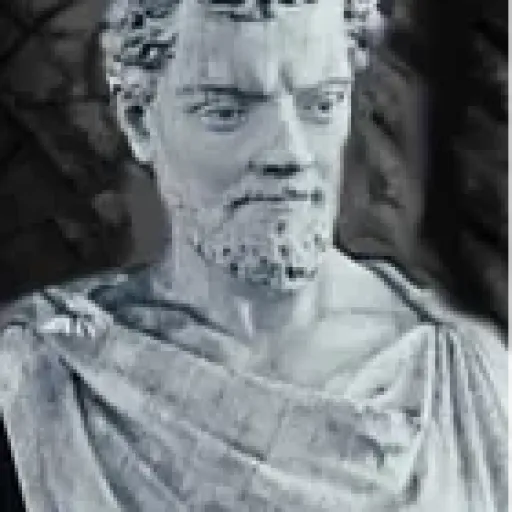
Understandably there is very little recorded about the life of the Roman philosopher and poet Lucretius because he was born before the birth of Christ. One thing that is fairly certain though is that he wrote one poem of great length which he called De rerum natura. This was based on the teachings and beliefs of a Greek philosopher called Epicurus who pre-dated the life of Lucretius by at least 200 years. It was certainly an ambitious project and the title translates into English as On the Nature of Things or On the Nature of the Universe. His birth name was Titus Lucretius Carus and it is believed that he was born circa 99 BC, probably into the aristocratic family known as gens Lucretia. His work plainly shows intimate knowledge of the lifestyle enjoyed by the Patricians of Roman society and his descriptions of the countryside suggests that he will have inhabited country estates somewhere. Lucretius had a good education, probably mastering Latin and Greek along with and in-depth study of classic literature and philosophy. He attracted a great deal of admiration for his writing style, some describing him as a master of the written word with frequent flashes of genius. The poem De rerum natura appears to have been dedicated to an influential Roman elected official called Gaius Memmius who had close links with the Emperor Caesar for a time. Whether this was because Memmius sponsored Lucretius in the writing of the poem or whether the author was actually trying to convert his patron to the philosophies of Epicurus is unclear. It certainly had a major impact on Augustan poets such as Virgil and maintained its status as a work of supreme importance for over a thousand years. It seemed to become forgotten or discarded until it was rediscovered by German monks in 1417. The Florentine scholar known as Poggio was credited with the rediscovery of the original manuscript and he used the poem during the era of Enlightenment, aiding the construction of a new Christian humanism. There are curiosities to be found in this work though, an example being found at the end of Book 6 where the author is describing a plague in Athens and the tale appears to stop before it has reached its natural conclusion. Scholars have suggested that this may have been due to his early death. There appears to have been no time to revise the original manuscript, to correct any anomalies or remove repetitive parts that were subsequently found within. Just to offer a flavour of this epic piece of work, here are the opening lines of Book 1: As mentioned above, Lucretius was much admired by other Republican Roman poets such as Virgil who appears to make reference to him in his second Georgics book. The following quotation is believed to refer to Lucretius: One theory that was strongly put forward regarding the death of Lucretius came from the theologian and historian Jerome, some 400 years later, who described him as a “lovesick, mad poet” who was only able to write between bouts of insanity brought about by a poisonous love potion. This parlous state drove the poet to suicide and an early death. Scholars have since cast great doubt on this theory though. Although dates cannot, of course, be verified it is believed that Titus Lucretius Carus died circa 55 BC which would have made him 44 years old.
O thou who first uplifted in such dark So clear a torch aloft, who first shed light Upon the profitable ends of man, O thee I follow, glory of the Greeks,…
First, then, I say, the mind which oft we call The intellect, wherein is seated life's Counsel and regimen, is part no less Of man than hand and foot and eyes are parts…
Now come: that thou mayst able be to know That minds and the light souls of all that live Have mortal birth and death, I will go on Verses to build meet for thy rule of life,…
Therefore death to us Is nothing, nor concerns us in the least, Since nature of mind is mortal evermore. And just as in the ages gone before…
Tartarus, out-belching from his mouth the surge Of horrible heat- the which are nowhere, nor Indeed can be: but in this life is fear Of retributions just and expiations…
'Tis sweet, when, down the mighty main, the winds Roll up its waste of waters, from the land To watch another's labouring anguish far, Not that we joyously delight that man…
Now come: I will untangle for thy steps Now by what motions the begetting bodies Of the world-stuff beget the varied world, And then forever resolve it when begot,…
Now come, and next hereafter apprehend What sorts, how vastly different in form, How varied in multitudinous shapes they are- These old beginnings of the universe;…
Now come, this wisdom by my sweet toil sought Look thou perceive, lest haply thou shouldst guess That the white objects shining to thine eyes Are gendered of white atoms, or the bl…
Once more, we all from seed celestial spring, To all is that same father, from whom earth, The fostering mother, as she takes the drops Of liquid moisture, pregnant bears her brood…
Mother of Rome, delight of Gods and men, Dear Venus that beneath the gliding stars Makest to teem the many-voyaged main And fruitful lands- for all of living things…
This terror, then, this darkness of the mind, Not sunrise with its flaring spokes of light, Nor glittering arrows of morning can disperse, But only Nature's aspect and her law,…
But yet creation's neither crammed nor blocked About by body: there's in things a void- Which to have known will serve thee many a turn, Nor will not leave thee wandering in doubt,…
But, now again to weave the tale begun, All nature, then, as self-sustained, consists Of twain of things: of bodies and of void In which they're set, and where they're moved around…
Bodies, again, Are partly primal germs of things, and partly Unions deriving from the primal germs. And those which are the primal germs of things…
15 / 35 gösteriliyor
Sana daha iyi bir okuma deneyimi sunabilmek için sitemizde çerez kullanıyoruz. Kişisel verilerin KVKK ve GDPR kapsamında işlenir; hangi çerezlere izin verdiğini dilediğin zaman değiştirebilirsin.