Italy : 19. Foscari
S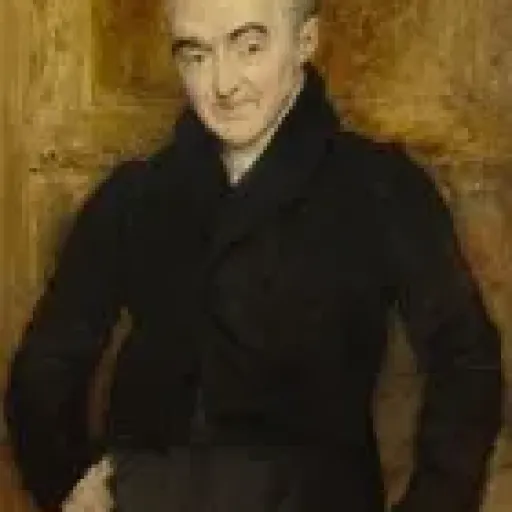 Samuel Rogers
0
Altın Yaprak
Let us lift up the curtain, and observe
What passes in that chamber. Now a sigh,
And now a groan is heard. Then all is still.
Twenty are sitting as in judgement there;
Men who have served their country, and grown grey
In governments and distant embassies,
Men eminent alike in war and peace;
Such as in effigy shall long adorn
The walls of Venice -- to show what she was!
Their garb is black, and black the arras is,
And sad the general aspect. Yet their looks
Are calm, are cheerful; nothing there like grief,
Nothing or harsh or cruel. Still the noise,
That low and dismal moaning.
Half withdrawn,
A little to the left, sits one in crimson,
A venerable man, fourscore and five.
Cold drops of sweat stand on his furrowed brow.
His hands are clenched; his eyes half-shut and glazed;
His shrunk and withered limbs rigid as marble.
'Tis Foscari, the Doge. And there is one,
A young man, lying at his feet, stretched out
In torture. 'Tis his son. 'Tis Giacomo,
His only joy (and has he lived for this?)
Accused of murder. Yesternight the proofs,
If proofs they be, were in the Lion's Mouth
Dropped by some hand unseen; and he, himself,
Must sit and look on a beloved son
Suffering the Question. ---- Twice to die in peace,
To save, while yet he could, a falling house,
And turn the hearts of his fell Adversaries,
Those who had now, like hell-hounds in full cry,
Chased down his last of four, twice did he ask
To lay aside the Crown, and they refused,
An oath exacting, never more to ask;
And there he sits, a spectacle of woe,
Condemned in bitter mockery to wear
The bauble he had sighed for. ---- Once again
The screw is turned; and, as it turns, the Son
Looks up, and, in a faint and broken tone,
Murmurs 'My Father!' The old man shrinks back,
And in his mantle muffles up his face.
'Art thou not guilty?' says a voice that once
Would greet the Sufferer long before they met.
'Art thou not guilty?' -- 'No! Indeed I am not!'
But all is unavailing. In that Court
Groans are confessions; Patience, Fortitude,
The work of Magic; and, released, revived,
For Condemnation, from his Father's lips
He hears the sentence, 'Banishment to Candia.
Death if he leaves it.' And the bark sets sail;
And he is gone from all he loves in life!
Gone in the dead of night -- unseen of any --
Without a word, a look of tenderness,
To be called up, when, in his lonely hours,
He would indulge in weeping. Like a ghost,
Day after day, year after year, he haunts
An ancient rampart that o'erhangs the sea;
Gazing on vacancy, and hourly there
Starting as from some wild and uncouth dream,
To answer to the watch. ---- Alas, how changed
From him the mirror of the Youth of Venice;
Whom in the slightest thing, or whim of chance,
Did he but wear his doublet so and so,
All followed; at whose nuptials, when he won
That maid at once the noblest, fairest, best,
A daughter of the House that now among
Its ancestors in monumental brass
Numbers eight Doges -- to convey her home,
The Bucentaur went forth; and thrice the Sun
Shone on the Chivalry, that, front to front,
And blaze on blaze reflecting, met and ranged
To tourney at St. Mark's. ---- But lo, at last,
Messengers come. He is recalled: his heart
Leaps at the tidings. He embarks: the boat
Springs to the oar, and back again he goes --
Into that very Chamber! there to lie
In his old resting-place, the bed of steel;
And thence look up (Five long, long years of Grief
Have not killed either) on his wretched Sire,
Still in that seat ---- as though he had not stirred;
Immovable, and muffled in his cloak.
But now he comes, convicted of a crime
Great by the laws of Venice. Night and day,
Brooding on what he had been, what he was,
'Twas more than he could bear. His longing-fits
Thickened upon him. His desire for home
Became a madness; and, resolved to go,
If but to die, in his despair he writes
A letter to the sovereign-prince of Milan,
(To him whose name, among the greatest now,
Had perished, blotted out at once and rased,
But for the rugged limb of an old oak)
Soliciting his influence with the State,
And drops it to be found. ---- 'Would ye know all?
I have transgressed, offended wilfully;
And am prepared to suffer as I ought.
But let me, let me, if but for an hour,
(Ye must consent -- for all of you are sons,
Most of your husbands, fathers) let me first
Indulge the natural feelings of a man,
And, ere I die, if such my sentence be,
Press to my heart ('tis all I ask of you)
My wife, my children -- and my aged mother --
Say, is she yet alive?' He is condemned
To go ere set of sun, go whence he came,
A banished man; and for a year to breathe
The vapour of a dungeon. But his prayer
(What could they less?) is granted. In a hall
Open and crowded by the common herd,
'Twas there a Wife and her four Sons yet young,
A Mother borne along, life ebbing fast,
And an old Doge, mustering his strength in vain,
Assembled now, sad privilege, to meet
One so long lost, one who for them had braved,
For them had sought -- death and yet worse than death!
To meet him, and to part with him for ever!--
Time and their wrongs had changed them all, him most!
Yet when the Wife, the Mother looked again,
'Twas he -- 'twas he himself -- 'twas Giacomo!
And all clung round him, weeping bitterly;
'Weeping the more, because they wept in vain.
Unnerved, and now unsettled in his mind
From long and exquisite pain, he sobs and cries,
Kissing the old Man's cheek, 'Help me, my Father!
Let me, I pray thee, live once more among ye:
Let me go home.' ----- 'My Son,' returns the Doge,
Mastering his grief, 'if thou art indeed my Son,
Obey. Thy Country wills it.'
Giacomo
That night embarked; sent to an early grave
For one whose dying words, 'The deed was mine!
He is most innocent! 'Twas I who did it!'
Came when he slept in peace. The ship, that sailed
Swift as the winds with his deliverance,
Bore back a lifeless corse. Generous as brave,
Affection, kindness, the sweet offices
Of duty and love were from his tenderest years
To him as needful as his daily bread;
And to become a by-word in the streets,
Bringing a stain on those who gave him life,
And those, alas, now worse than fatherless--
To be proclaimed a ruffian, a night-stabber,
He on whom none before had breathed reproach--
He lived but to disprove it. That hope lost,
Death followed. Oh, if Justice be in Heaven,
A day must come of ample Retribution!
Then was thy cup, old Man, full to the brim.
But thou wert yet alive; and there was one,
The soul and spring of all that Enmity,
Who would not leave thee; fastening on thy flank,
Hungering and thirsting, still unsatisfied;
One of a name illustrious as thine own!
One of the Ten! one of the Invisible Three!
'Twas Loredano. When the whelps were gone,
He would dislodge the Lion in his den;
And, leading on the pack he long had led,
The miserable pack that ever howled
Against fallen Greatness, moved that Foscari
Be Doge no longer; urging his great age;
Calling the loneliness of grief neglect
Of duty, sullenness against the laws.
---- 'I am most willing to retire,' said he:
'But I have sworn, and cannot of myself.
Do with me as ye please.' ---- He was deposed,
He, who had reigned so long and gloriously;
His ducal bonnet taken from his brow,
His robes stript off, his seal and signet-ring
Broken before him. But now nothing moved
The meekness of his soul. All things alike!
Among the six that came with the decree,
Foscari saw one he knew not, and inquired
His name. 'I am the son of Marco Memmo.'
'Ah,' he replied, 'thy father was my friend.'
And now he goes. 'It is the hour and past.
I have no business here.' ---- 'But wilt thou not
Avoid the gazing crowd? That way is private.'
'No! as I entered, so will I retire.'
And, leaning on his staff, he left the House,
His residence for five-and-thirty years,
By the same stairs up which he came in state;
Those where the giants stand, guarding the ascent,
Monstrous, terrific. At the foot he stopt,
And, on his staff still leaning, turned and said,
'By mine own merits did I come. I go,
Driven by the malice of mine Enemies.'
Then to his boat withdrew, poor as he came,
Amid the sighs of them that dared not speak.
This journey was his last. When the bell rang
At dawn, announcing a new Doge to Venice,
It found him on his knees before the Cross,
Clasping his aged hands in earnest prayer;
And there he died. Ere half its task was done,
It rang his knell.
But whence the deadly hate
That caused all this -- the hate of Loredano?
It was a legacy his Father left,
Who, but for Foscari, had reigned in Venice,
And, like the venom in the serpent's bag,
Gathered and grew! Nothing but turned to hate!
In vain did Foscari supplicate for peace,
Offering in marriage his fair Isabel.
He changed not, with a dreadful piety
Studying revenge; listening to those alone
Who talked of vengeance; grasping by the hand
Those in their zeal (and none were wanting there)
Who came to tell him of another Wrong,
Done or imagined. When his father died,
They whispered, 'Twas by poison!' and the words
Struck him as uttered from his father's grave.
He wrote it on the tomb ('tis there in marble)
And with a brow of care, most merchant-like,
Among the debtors in his leger-book
Entered at full (nor month nor day forgot)
'Francesco Foscari -- for my father's death.'
Leaving a blank -- to be filled up hereafter.
When Foscari's noble heart at length gave way,
He took the volume from the shelf again
Calmly, and with his pen filled up the blank,
Inscribing, 'He has paid me.'
Ye who sit
Brooding from day to day, from day to day
Chewing the bitter cud, and starting up
As tho' the hour was come to whet your fangs,
And, like the Pisan, gnaw the hairy scalp
Of him who had offended -- if ye must,
Sit and brood on; but oh forbear to teach
The lesson to your children.
Bu şiiri puanla
Henüz puan verilmemiş