İngilizce
High stretched upon the swinging yard, I gather in the sheet; But it is hard And stiff, and one cries haste.…
Aramak için en az iki harf yaz.
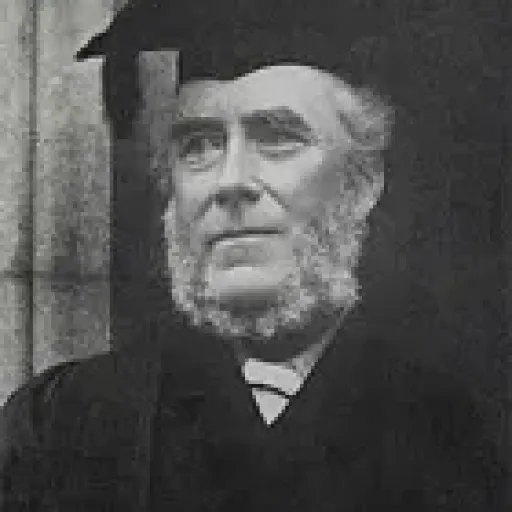
Thomas Edward Brown was a Manx poet of some distinction from the late Victorian era. More commonly known as T E Brown, he was born on the Isle of Man which lies off the north western shore of England. He strived for all of his life to bring to literary attention the old Anglo-Manx dialect. There are strains of Gaelic in this peculiar language form, which is understandable bearing in mind the island’s close proximity to both Ireland and Scotland. Although Brown carved out a notable academic career for himself in both Oxford and Bristol he never forgot his roots and, on his retirement from teaching, he retired to the island to continue writing. He was so well regarded that many regarded him as the “Manx National Poet”, which, you might say, was perhaps an unofficial Poet Laureateship. Thomas Edward Brown was born on 5th May 1840 in Douglas, the capital town of the Isle of Man. He was the son of a clergyman who gave him private tuition until entering King William’s College on the island. He moved from there to Christ Church College, Oxford and despite the stigma of being a “servitor” at college he gained a double first degree. Although he was subsequently made a Fellow of Oriel college he never forgot the humiliation of his time as a servitor; this literally meant that he had to act as a servant to fellow students and was entitled to free tuition, board and lodgings. Understandably he felt like a second class citizen amongst fellow students from richer backgrounds. Following his time at Oxford he went back home and taught at his old school for a while. Ordination as a deacon followed but he did not have any ambitions to become a priest at that time. He was busy writing and his narrative style of poetry was published either in magazine form or in collections of verse. His books included Fo’c’s’le Yarns in 1881 and The Manx Witch and other Poems in 1889. His last book of verse appeared in 1893 under the title Old John and other Poems. He generally wrote in a bold but ruggedly tender style, never afraid of inserting pauses and irregular rhythms. His work illustrated the piety and patriotism of island life. His poem Land, Ho! is a good example of his obvious love and affection for the island of his birth. It describes a journey across the sea with his home shores coming into view: After a few years of teaching on the island a much better position opened up for him as head master of a prestigious private school in Gloucester. He served there with distinction between 1857 and 1863, thought of by some as a “man of genius”. He was on the move again though when his considerable abilities earned him a senior position at Clifton College in Bristol. Brown stayed at Clifton for almost thirty years and became revered and loved in equal measure by both boys and teaching colleagues. Seen by most that he came across as an eccentric genius they were all sad to see him retire, returning once again to the island of his birth. He would make one more visit to Clifton though which, sadly, resulted in his death. It was five years after retiring from teaching that he returned to Bristol in late October, 1897 to talk to the boys. While delivering a rousing, vivacious speech from the rostrum he suddenly appeared to swoon and was clearly not well. Less than two hours later he was dead having suffered a burst blood vessel in the brain. Thomas Edward Brown died on the 29th October 1897, aged 67 and was buried in Bristol.
High stretched upon the swinging yard, I gather in the sheet; But it is hard And stiff, and one cries haste.…
SHE knelt upon her brother's grave, My little girl of six years old-- He used to be so good and brave, The sweetest lamb of all our fold;…
To-night I saw three maidens on the beach, Dark-robed descending to the sea, So slow, so silent of all speech, And visible to me…
I bended unto me a bough of May, That I might see and smell: It bore it in a sort of way, It bore it very well.…
WHEN Jessie comes with her soft breast, And yields the golden keys, Then is it as if God caress'd Twin babes upon His knees--…
I know ’tis but a loom of land, Yet is it land, and so I will rejoice, I know I cannot hear His voice Upon the shore, nor see Him stand;…
Sweet breeze that sett'st the summer birds a swaying, Dear lambs amid the primrose meadows playing Let me not think! O floods, upon whose brink…
A garden is a lovesome thing, God wot! Rose plot, Fringed pool, Ferned grot--…
As I was carving images from clouds, And tinting them with soft ethereal dyes Pressed from the pulp of dreams, one comes, and cries:-- "Forbear!" and all my heaven with gloom enshr…
The Man that hath great griefs I pity not; ’Tis something to be great In any wise, and hint the larger state, Though but in shadow of a shade, God wot!…
Expecting Him, my door was open wide: Then I looked round If any lack of service might be found, And saw Him at my side:…
Methinks in Him there dwells alway A sea of laughter very deep, Where the leviathans leap, And little children play,…
TO live within a cave--it is most good; But, if God make a day, And some one come, and say, 'Lo! I have gather'd faggots in the wood!'…
When He appoints to meet thee, go thou forth— It matters not If south or north, Bleak waste or sunny plot.…
O blackbird, what a boy you are! How you do go it! Blowing your bugle to that one sweet star - How you do blow it!…
Sana daha iyi bir okuma deneyimi sunabilmek için sitemizde çerez kullanıyoruz. Kişisel verilerin KVKK ve GDPR kapsamında işlenir; hangi çerezlere izin verdiğini dilediğin zaman değiştirebilirsin.