The Ruined Abbey, Or, The Affects Of Superstition
W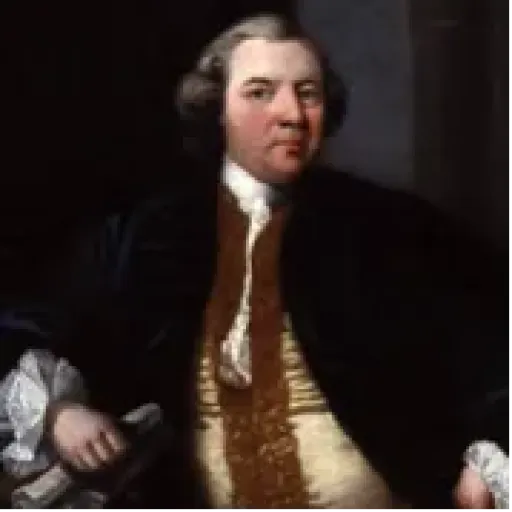 William Shenstone
0
Altın Yaprak
At length fair Peace, with olive crown'd, regains
Her lawful throne, and to the sacred haunts
Of wood or fount the frighted Muse returns.
Happy the bard who, from his native hills,
Soft musing on a summer's eve, surveys
His azure stream, with pensile woods enclosed;
Or o'er the glassy surface with his friend,
Or faithful fair, through bordering willows green,
Wafts his small frigate. Fearless he of shouts,
Or taunts, the rhetoric of the watery crew
That ape confusion from the realms they rule;
Fearless of these; who shares the gentler voice
Of peace and music; birds of sweetest song
Attune from native boughs their various lay,
And cheer the forest; birds of brighter plume
With busy pinion skim the glittering wave,
And tempt the sun; ambitious to display
Their several merit, while the vocal flute
Or number'd verse, by female voice endear'd,
Crowns his delight, and mollifies the scene.
If solitude his wandering steps invite
To some more deep recess (for hours there are
When gay, when social minds to Friendship's voice,
Or Beauty's charm, her wild abodes prefer),
How pleased he treads her venerable shades,
Her solemn courts! the centre of the grove!
The root-built cave, by far extended rocks
Around embosom'd, how it soothes the soul!
If scoop'd at first by superstitious hands,
The rugged cell received alone the shoals
Of bigot minds, Religion dwells not here,
Yet Virtue, pleased at intervals retires:
Yet here may Wisdom, as she walks the maze,
Some serious truths collect, the rules of life,
And serious truths of mightier weight than gold!
I ask not wealth; but let me hoard with care,
With frugal cunning, with a niggard's art,
A few fix'd principles, in early life,
Ere indolence impede the search, explored;
Then, like old Latimer, when age impairs
My judgment's eye, when quibbling schools attack
My grounded hope, or subtler wits deride,
Will I not blush to shun the vain debate,
And this mine answer: 'Thus, 'twas thus I thought,
My mind yet vigorous, and my soul entire;
Thus will I think, averse to listen more
To intricate discussion, prone to stray.
Perhaps my reason may but ill defend
My settled faith; my mind, with age impair'd,
Too sure its own infirmities declare.
But I am arm'd by caution, studious youth,
And early foresight: now the winds may rise,
The tempest whistle, and the billows roar;
My pinnace rides in port, despoil'd and worn,
Shatter'd by time and storms, but while it shuns
The unequal conflict, and declines the deep,
Sees the strong vessel fluctuate, less secure.'
Thus while he strays, a thousand rural scenes
Suggest instruction, and instructing please.
And see betwixt the grove's extended arms
An Abbey's rude remains attract thy view,
Gilt by the mid-day sun: with lingering step
Produce thine axe (for, aiming to destroy
Tree, branch, or shade, for never shall thy breast
Too long deliberate), with timorous hand
Remove the obstructive bough; nor yet refuse,
Though sighing, to destroy that favourite pine,
Raised by thine hand, in its luxuriant prime
Of beauty fair, that screens the vast remains.
Aggrieved, but constant as the Roman sire,
The rigid Manlius, when his conquering son
Bled by a parent's voice, the cruel meed
Of virtuous ardour, timelessly display'd;
Nor cease till; through the gloomy road, the pile
Gleam unobstructed: thither oft thine eye
Shall sweetly wander; thence returning, soothe
With pensive scenes thy philosophic mind.
These were thy haunts, thy opulent abodes,
O Superstition! hence the dire disease
(Balanced with which the famed Athenian pest
Were a short headache, were the trivial pain
Of transient indigestion) seized mankind.
Long time she raged, and scarce a southern gale
Warm'd our chill air, unloaded with the threats
Of tyrant Rome; but futile all, till she,
Rome's abler legate, magnified their power,
And in a thousand horrid forms attired.
Where then was truth to sanctify the page
Of British annals? if a foe expired,
The perjured monk suborn'd infernal shrieks,
And fiends to snatch at the departing soul
With hellish emulation: if a friend,
High o'er his roof exultant angels tune
Their golden lyres, and waft him to the skies.
What then were vows, were oaths, were plighted faith?
The sovereign's just, the subject's loyal pact,
To cherish mutual good, annull'd and vain
By Roman magic, grew an idle scroll
Ere the frail sanction of the wax was cold.
With thee, Plantagenet! from civil broils
The land awhile respired, and all was peace.
Then Becket rose, and, impotent of mind,
From regal courts with lawless fury march'd
The Church's blood-stain'd convicts, and forgave;
Bid murderous priests the sovereign frown contemn,
And with unhallow'd crosier bruised the crown.
Yet yielded not supinely tame a prince
Of Henry's virtues; learn'd, courageous, wise,
Of fair ambition. Long his regal soul,
Firm and erect, the peevish priest exiled,
And braved the fury of revengeful Rome.
In vain! let one faint malady diffuse
The pensive gloom which Superstition loves,
And see him, dwindled to a recreant groom,
Rein the proud palfrey while the priest ascends!
Was Coeur-de-Lion blest with whiter days?
Here the cowl'd zealots with united cries
Urged the crusade; and see! of half his stores
Despoil'd the wretch, whose wiser bosom chose
To bless his friends, his race, his native land.
Of ten fair suns that rode their annual race,
Not one beheld him on his vacant throne;
While haughty Longchamp, 'mid his liveried files
Of wanton vassals, spoil'd his faithful realm,
Battling in foreign fields; collecting wide
A laurel harvest for a pillaged land.
Oh! dear-bought trophies! when a prince deserts
His drooping realm, to pluck the barren sprays!
When faithless John usurp'd the sullied crown,
What ample tyranny! the groaning land
Deem'd earth, deem'd heaven, its foe! Six tedious years
Our helpless fathers in despair obey'd
The papal interdict; and who obey'd
The sovereign plunder'd. O inglorious days!
When the French tyrant, by the futile grant
Of papal rescript, claim'd Britannia's throne,
And durst invade! be such inglorious days
Or hence forgot, or not recall'd in vain!
Scarce had the tortured ear, dejected heard
Rome's loud anathema, but heartless, dead
To every purpose, men nor wish'd to live
Nor dared to die. The poor laborious hind
Heard the dire curse, and from his trembling hand
Fell the neglected crook that ruled the plain:
Thence journeying home, in every cloud he sees
A vengeful angel, in whose waving scroll
He reads damnation; sees its sable train
Of grim attendants, pencill'd by despair!
The weary pilgrim from remoter climes
By painful steps arrived; his home, his friends,
His offspring left, to lavish on the shrine
Of some far-honour'd saint his costly stores,
Inverts his foot-step; sickens at the sight
Of the barr'd fane, and silent sheds his tear.
The wretch, whose hope by stern Oppression chased
From every earthly bliss, still as it saw
Triumphant wrong, took wing, and flew to heaven,
And rested there, now mourn'd his refuge lost,
And wonted peace. The sacred fane was barr'd;
And the lone altar, where the mourners throng'd
To supplicate remission, smoked no more:
While the green weed luxuriant round uprose,
Some from their deathbed, whose delirious faith
Through every stage of life to Rome's decrees
Obsequious, humbly hoped to die in peace,
Now saw the ghastly king approach, begirt
In tenfold terrors; now expiring heard
The last loud clarion sound, and Heaven's decree
With unremitting vengeance bar the skies.
Nor light the grief, by Superstition weigh'd,
That their dishonour'd corse, shut from the verge
Of hallow'd earth, or tutelary fane,
Must sleep with brutes, their vassals, on the field,
Unneath some path, in marl unexercised!
No solemn bell extort a neighbour's tear!
No tongue of priest pronounce their soul secure,
Nor fondest friend assure their peace obtain'd!
The priest, alas! so boundless was the ill,
He, like the flock he pillaged, pined forlorn;
The vivid vermeil fled his fady cheek;
And his big paunch, distended with the spoils
Of half his flock, emaciate, groan'd beneath
Superior pride, and mightier lust of power!
'Twas now Rome's fondest friend, whose meagre hand
Told to the midnight lamp his holy beads
With nice precision, felt the deeper wound,
As his gull'd soul revered the conclave more.
Whom did the ruin spare? for wealth, for power,
Birth, honour, virtue, enemy, and friend,
Sunk helpless, in the dreary gulf involved,
And one capricious curse enveloped all!
Were kings secure? in towering stations born,
In flattery nursed, inured to scorn mankind,
Or view diminish'd from their site sublime
As when a shepherd, from the lofty brow
Of some proud cliff surveys his lessening flock
In snowy groups diffusive stud the vale.
Awhile the furious menace John return'd,
And breathed defiance loud. Alas! too soon
Allegiance sickening, saw its sovereign yield,
An angry prey to scruples not his own.
The loyal soldier, girt around with strength,
Who stole from mirth and wine his blooming years,
And seized the falchion, resolute to guard
His sovereign's right, impalsied at the news,
Finds the firm bias of his soul reversed
For foul desertion; drops the lifted steel,
And quits Fame's noble harvest, to expire
The death of monks, of surfeit and of sloth!
At length, fatigued with wrongs, the servile king
Drain'd from his land its small remaining stores
To buy remission. But could these obtain?
No! resolute in wrongs the priest obdured,
Till crawling base, to Rome's deputed slave,
His fame, his people, and his crown, he gave.
Mean monarch! slighted, braved, abhorr'd, before!
And now, appeased by delegated sway,
The wily pontiff scorns not to recall
His interdictions. Now the sacred doors
Admit repentant multitudes, prepared
To buy deceit; admit obsequious tribes
Of satraps: princes crawling to the shrine
Of sainted villany! the pompous tomb
Dazzling with gems and gold, or in a cloud
Of incense wreath'd amidst a drooping land
That sigh'd for bread! 'Tis thus the Indian clove
Displays its verdant leaf, its crimson flower,
And sheds its odours; while the flocks around,
Hungry and faint, the barren sands explore
In vain! nor plant nor herb endears the soil,
Drain'd and exhaust to swell its thirsty pores,
And furnish luxury.-Yet, yet in vain
Britannia strove; and whether artful Rome
Caress'd or cursed her, Superstition raged,
And blinded, fetter'd, and despoil'd the land.
At length some murderous monk, with poisonous art,
Expell'd the life his brethren robb'd of peace.
Nor yet surceased with John's disastrous fate
Pontific fury: English wealth exhaust,
The sequent reign beheld the beggar'd shore
Grim with Italian usurers; prepared
To lend, for griping unexampled hire,
To lend-what Rome might pillage uncontroll'd.
For now with more extensive havoc raged
Relentless Gregory, with a thousand arts,
And each rapacious, born to drain the world!
Nor shall the Muse repeat how oft he blew
The croise's trumpet; then for sums of gold
Annull'd the vow, and bade the false alarm
Swell the gross hoards of Henry, or his own:
Nor shall she tell how pontiffs dared repeal
The best of charters! dared absolve the tie
Of British kings, by legal oath restrain'd:
Nor can she dwell on argosies of gold
From Albion's realm to servile shores convey'd,
Wrung from her sons, and speeded by her kings!
Oh, irksome days! when wicked thrones combine
With papal craft to gull their native land!
Such was our fate, while Rome's director taught
Of subjects, born to be their monarch's prey,
To toil for monks, for gluttony to toil,
For vacant gluttony; extortion, fraud,
For avarice, envy, pride, revenge, and shame!
O doctrine breathed from Stygian caves! exhaled
From inmost Erebus!-Such Henry's reign!
Urging his royal realm's reluctant hand
To wield the peaceful sword, by John erewhile
Forced from its scabbard, and with burnish'd lance,
Essay the savage cure, domestic war!
And now some nobler spirits chased the mist
Of general darkness. Grosted now adorn'd
The mitred wreath he wore, with Reason's sword
Staggering delusion's frauds; at length beneath
Rome's interdict expiring calm, resign'd
No vulgar soul, that dared to Heav'n appeal!
But, ah! this fertile glebe, this fair domain,
Had well-nigh ceded to the slothful hands
Of monks libidinous; ere Edward's care
The lavish hand of deathbed Fear restrain'd.
Yet was he clear of Superstition's taint?
He, too, misdeemful of his wholesome law,
Even he, expiring, gave his treasured gold
To fatten monks on Salem's distant soil!
Yes, the Third Edward's breast, to papal sway
So little prone, and fierce in honour's cause,
Could Superstition quell! before the towers
Of haggard Paris, at the thunder's voice
He drops the sword, and signs ignoble peace!
But still the Night, by Romish art diffused,
Collects her clouds, and with slow pace recedes;
When, by soft Bourdeau's braver queen approved,
Bold Wickliff rose; and while the bigot power
Amidst her native darkness skulk'd secure,
The demon vanish'd as he spread the day.
So from his bosom Cacus breathed of old
The pitchy cloud, and in a night of smoke
Secure, awhile his recreant life sustain'd;
Till famed Alcides, o'er his subtlest wiles
Victorious, cheer'd the ravaged nations round.
Hail, honour'd Wickliff! enterprising sage!
An Epicurus in the cause of truth!
For 'tis not radiant suns, the jovial hours
Of youthful Spring, an ether all serene,
Nor all the verdure of Campania's vales,
Can chase religious gloom! 'Tis reason, thought,
The light, the radiance, that pervades the soul,
And sheds its beams on heaven's mysterious way!
As yet this light but glimmer'd, and again
Error prevail'd; while kings by force upraised,
Let loose the rage of bigots on their foes,
And seek affection by the dreadful boon
Of licensed murder. Even the kindest prince,
The most extended breast, the royal Hal,
All unrelenting heard the Lollards' cry
Burst from the centre of remorseless flames;
Their shrieks endured! O stain to martial praise!
When Cobham, generous as the noble peer
That wears his honours, paid the fatal price
Of virtue blooming ere the storms were laid!
'Twas thus, alternate, truth's precarious flame
Decay'd or fiourish'd. With malignant eye
The pontiff saw Britannia's golden fleece,
Once all his own, invest her worthier sons!
Her verdant valleys, and her fertile plains,
Yellow with grain, abjure his hateful sway!
Essay'd his utmost art, and inly own'd
No labours bore proportion to the prize.
So when the tempter view'd, with envious eye,
The first fair pattern of the female frame,
All Nature's beauties in one form display'd,
And centering there, in wild amaze he stood;
Then only envying Heaven's creative hand;
Wish'd to his gloomy reign his envious arts
Might win this prize, and doubled every snare.
And vain were reason, courage, learning, all,
Till power accede; till Tudor's wild caprice
Smile on their cause; Tudor! whose tyrant reign,
With mental freedom crown'd, the best of kings
Might envious view, and ill prefer their own!
Then Wolsey rose, by Nature form'd to seek
Ambition's trophies, by address to win,
By temper to enjoy-whose humbler birth
Taught the gay scenes of pomp to dazzle more.
Then from its towering height with horrid sound
Rush'd the proud abbey: then the vaulted roofs,
Torn from their walls, disclosed the wanton scene
Of monkish chastity! Each angry friar
Crawl'd from his bedded strumpet, muttering low
An ineffectual curse. The pervious nooks,
That, ages past, convey'd the guileful priest
To play some image on the gaping crowd,
Imbibe the novel daylight, and expose,
Obvious, the fraudful enginery of Rome.
As though this opening earth to nether realms
Should flash meridian day, the hooded race
Shudder, abash'd to find their cheats display'd,
And, conscious of their guilt, and pleased to waive
Its fearful meed, resign'd their fair domain.
Nor yet supine, nor void of rage, retired
The pest gigantic; whose revengeful stroke
Tinged the red annals of Maria's reign,
When from the tenderest breast each wayward priest
Could banish mercy and implant a fiend!
When cruelty the funeral pyre uprear'd,
And bound Religion there, and fired the base!
When the same blaze, which on each tortured limb
Fed with luxuriant rage, in every face
Triumphant faith appear'd, and smiling hope.
O blest Eliza! from thy piercing beam
Forth flew this hated fiend, the child of Rome;
Driven to the verge of Albion, linger'd there,
Then with her James receding, cast behind
One angry frown, and sought more servile climes.
Henceforth they plied the long-continued task
Of righteous havoc, covering distant fields
With the wrought remnants of the shatter'd pile;
While through the land the musing pilgrim sees
A tract of brighter green, and in the midst
Appears a mouldering wall, with ivy crown'd,
Or Gothic turret, pride of ancient days!
Now but of use to grace a rural scene,
To bound our vistas, and to glad the sons
Of George's reign, reserved for fairer times!
Kamu malı: şairin ölümünün üzerinden 70 yıldan fazla geçti.
Bu şiiri puanla
Henüz puan verilmemiş