LINCOLN?— Well, I was in the old Second Maine, The first regiment in Washington from the Pine Tree State. Of course I didn't get the butt of the clip;…
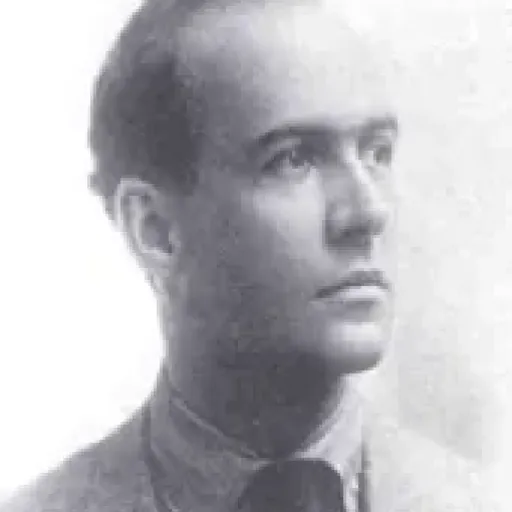
Witter Bynner lived the Bohemian lifestyle as a poet in the United States during the first half of the 20th century. He alternated his time between east and west coasts, writing and seeking out the company of well-known literary figures and movie stars of the day. He also travelled extensively in Europe and Asia, becoming an avid student and translator of ancient Chinese literature. His ability as a writer led to the Presidency of the Poetry Society of America along with membership of other organisations concerned with modern literature. He also taught English for a time at the end of the First World War. He was born Harold Witter Bynner in Brooklyn, New York on the 10th August 1881. His childhood was disrupted and largely unhappy, with an alcoholic father and a domineering mother. His mother took her two sons to Connecticut when Harold was seven years old and, shortly after, on to Brookline, Massachusetts. After attending high school there he went on to Harvard University in 1898 and joined the staff of the student literary magazine – The Advocate. He adopted the name “Hal” while at Harvard and this stuck with him for the rest of his life. He also used a pen name occasionally, particularly when he joined a group of friends in setting up a spoof poetic style called the “Spectrist School of Poets” in 1916. It was similar to the “imagist” movement and he and two other writers published a slim volume of poems, all using pen names. Witter took the name Emanuel Morgan for this project. While at Harvard he involved himself actively in the women’s suffrage movement and he graduated with honours in 1902. He published his first “official” book of poems in 1907 called An Ode to Harvard and, in 1911, he was given the honour of being the Harvard Phi Beta Kappa Poet. Bynner decided that Santa Fe would be his home for the foreseeable future and he enjoyed a long-running homosexual relationship there with Robert Hunt. Their home was a magnet for artists, writers and actors and frequent house guests included Rita Hayworth and Errol Flynn from the world of Hollywood movies. Robert Frost, W H Auden, Aldous Huxley and D H Lawrence were among the many literary visitors to the house. Bynner travelled extensively – to Mexico and Europe and he went to Japan, Korea and China in 1917. His time in China inspired his interest in Chinese poetry and, after the war, he entered into a long collaboration with Kiang Kang-hu, a professor of Chinese. They worked together on translations of T’ang Dynasty poems. During the war Bynner had been a conscientious objector and did a kind of community service teaching English to a students’ Army Training Corps at the University of California, Berkeley. He made a success of this and stayed on after the war teaching, with a number of his students going on to become poets themselves. He wrote a celebratory piece to commemorate the end of the war called A Canticle of Praise and it was performed at the Hearst Greek Theatre in front of a reported audience of 8,000. Bynner was in China between 1920 and 1921 and Mexico in 1923. He was accompanied by his lover in Mexico and Lawrence wrote a novel called The Plumed Serpent which was said to be based on characters including Bynner and his friend Johnson. During the 1930s Bynner began his lifelong relationship with Robert Hunt. Witter Bynner wrote a great deal of poetry dedicated to friends and lovers that he had known but he also wrote one called Santa Fe, a tribute to the place he loved and lived in for so many years. Here is the poem: During the 1960s Bynner’s health began to decline and, in 1965, he suffered a stroke from which he never recovered. Harold Witter Bynner died on the 1st June 1968. He was 86.
Witter Bynner şiirleri
When I walked home forgotten, When I walked home in grief, I found a letter under my door. It was an autumn leaf.
Has Like a navel A hole in its middle Through which a gull may fly…
An arrow, feathery, alive, He darts and sings- Then with a sudden skimming dive Of striped wings…
Cease from the asking, you receive the answer. God is not God, life life nor wonder wonder…
In came the moon and covered me with wonder, Touched me and was near me and made me very still. In came a rush of song, like rain after thunder, Pouring importunate on my window-si…
As if you were an archer with your swift hand at the bow, The arrows of delight shot through my body.…
Indian-footed move the mists From the corner of the lake, Silent, sinuous and bent; And their trailing feathers shake,…
Because we felt there could not be A mowing in reality So white and feathery-blown and gay With blossoms of wild caraway,…
Grieve not for the invisible, transported brow On which like leaves the dark hair grew, Nor for the lips of laughter that are now Laughing inaudibly in sun and dew,…
Name me no names for my disease, With uninforming breath; I tell you I am none of these, But homesick unto death --…
I Come and go And never stay. I pick and choose A night, a day,…
In Kamakura, near the great Daibutsu, When I had sat a long time on the ground And been gathered up, forgetful of my face and form, Into the face and form of endless dream,…
There is an island where a man alone, Alive beyond the selfishness of living, Knows the whole world around him as his own Without resenting and without forgiving.
Lest I learn, with clearer sight, Such beauty cannot be -- Tie a bandage, pull it tight, Blind me, I would not see!…
15 / 30 gösteriliyor