The Witch of Hebron
C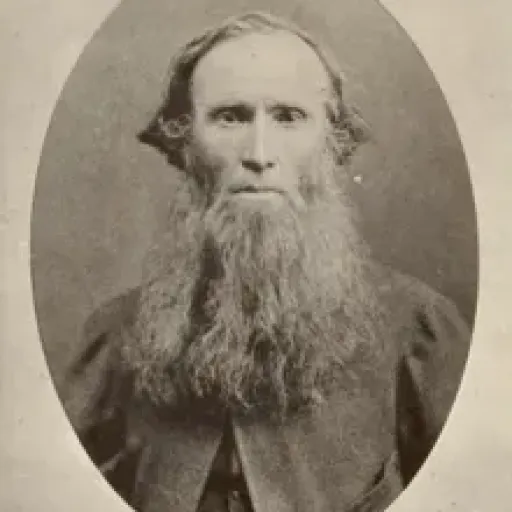 Charles Harpur
0
Altın Yaprak
A Rabbinical Legend
Part I.
From morn until the setting of the sun
The rabbi Joseph on his knees had prayed,
And, as he rose with spirit meek and strong,
An Indian page his presence sought, and bowed
Before him, saying that a lady lay
Sick unto death, tormented grievously,
Who begged the comfort of his holy prayers.
The rabbi, ever to the call of grief
Open as day, arose; and girding straight
His robe about him, with the page went forth;
Who swiftly led him deep into the woods
That hung, heap over heap, like broken clouds
On Hebron’s southern terraces; when lo!
Across a glade a stately pile he saw,
With gleaming front, and many-pillared porch
Fretted with sculptured vinage, flowers and fruit,
And carven figures wrought with wondrous art
As by some Phidian hand.
But interposed
For a wide space in front, and belting all
The splendid structure with a finer grace,
A glowing garden smiled; its breezes bore
Airs as from paradise, so rich the scent
That breathed from shrubs and flowers; and fair the growths
Of higher verdure, gemm’d with silver blooms,
Which glassed themselves in fountains gleaming light
Each like a shield of pearl.
Within the halls
Strange splendour met the rabbi’s careless eyes,
Halls wonderful in their magnificance,
With pictured walls, and columns gleaming white
Like Carmel’s snow, or blue-veined as with life;
Through corridors he passed with tissues hung
Inwrought with threaded gold by Sidon’s art,
Or rich as sunset clouds with Tyrian dye;
Past lofty chambers, where the gorgeous gleam
Of jewels, and the stainèd radiance
Of golden lamps, showed many a treasure rare
Of Indian and Armenian workmanship
Which might have seemed a wonder of the world:
And trains of servitors of every clime,
Greeks, Persians, Indians, Ethiopians,
In richest raiment thronged the spacious halls.
The page led on, the rabbi following close,
And reached a still and distant chamber, where
In more than orient pomp, and dazzling all
The else-unrivalled splendour of the rest,
A queenly woman lay; so beautiful,
That though upon her moon-bright visage, pain
And langour like eclipsing shadows gloomed,
The rabbi’s aged heart with tremor thrilled;
Then o’er her face a hectic colour passed,
Only to leave that pallor which portends
The nearness of the tomb.
From youth to age
The rabbi Joseph still had sought in herbs
And minerals the virtues they possess,
And now of his medicaments he chose
What seemed most needful in her sore estate;
“Alas, not these,” the dying woman said,
“A malady like mine thou canst not cure,
’Tis fatal as the funeral march of Time!
But that I might at length discharge my mind
Of a dread secret, that hath been to me
An ever-haunting and most ghostly fear,
Darkening my whole life like an ominous cloud
And which must end it ere the morning come,
Therefore did I entreat thy presence here.”
The rabbi answered, “If indeed it stand
Within my power to serve thee, speak at once
All that thy heart would say. But if ’tis vain,
If this thy sin hath any mortal taint,
Forbear, O woman, to acquaint my soul
With aught that could thenceforth with horror chase
The memory of a man of Israel.”
“I am,” she said “the daughter of thy friend
Rabbi Ben Bachai—be his memory blest!
Once at thy side a laughing child I played;
I married with an Arab Prince, a man
Of lofty lineage, one of Ishmael’s race;
Not great in gear. Behold’st thou this abode?
Did ever yet the tent-born Arab build
Thus for his pride or pleasure? See’st thou
These riches? An no! Such were ne’er amassed
By the grey desert’s wild and wandering son;
Deadly the game by which I won them all!
And with a burning bitterness at best
Have I enjoyed them! And how gladly now
Would I, too late, forego them all, to mend
My broken peace with a repentant heed
In abject poverty!”
She ceased, and lay
Calm in her loveliness, with dreamy looks
Roaming, perhaps, in thought the fateful past;
Then suddenly her beauteous countenance grew
Bedimm’d and drear, then dark with mortal pangs,
While fierce convulsions shook her tortured frame,
And from her foaming lips such words o’erran,
That rabbi Joseph sank upon his knees,
And bowed his head a space in horror down
While ardent, pitying prayers for her great woe
Rose from his soul; when, lo! The woman’s face
Was cloudless as a summer heaven! The late
Dark brow was bright, the late pale cheek suffused
With roseate bloom; and, wondrous more than all,
Here weary eyes were changed to splendours now
That shot electric influence, and her lips
Were full and crimson, curled with stormy pride.
The doubting rabbi stood in wild amaze
To see the dying woman bold and fierce
In bright audacity of passion’s power.
“These are the common changes,” then she said,
“Of the fell ailment, that with torments strange,
Which search my deepest life, is tearing up
The dark foundations of my mortal state,
And sinking all its structures, hour by hour,
Into the dust of death. For nothing now
Is left me but to meet my nearing doom
As best I may in silent suffering.”
Then as he heard her words and saw her face,
The rabbi in his wisdom knew some strong
Indwelling evil spirit troubled her,
And straighway for an unction sent, wherewith
The famous ancestor whose name he bore,
Herod the Great’s chief hakim, had expelled
The daemon haunter of the dying king.
With this he touched her forehead and her eyes
And all her finger-tips. Forthwith he made
Within a consecrated crucible
A fire of citron-wood and cinnamon;
Then splashed the flames with incense, mingling all
With the strong influence of fervent prayer;
And, as the smoke arose, he bowed her head
Into its coils, that so she might inhale
Its salutary odour—till the fiend
That dwelt within her should be exorcised.
Her face once more grew pale with pain; she writhed
In burning torment, uttering many words
Of most unhallowed meaning! Yet her eyes
Were fixed the while, and motionless her lips!
Whereby the rabbi certainly perceived
’Twas not the woman of herself that spake,
But the dread spirit that possessed her soul,
And thus it cried aloud.
--------------------------------------------------------------------------------
Part II.
“WHY am I here, in this my last resort,
Perturbed with incense and anointings? Why
Compelled to listen to the sound of prayers
That smite me through as with the fire of God?
O pain, pain, pain! Is not this chamber full
Of the implacable stern punishers?
Full of avenging angels, holding each
A scourge of thunder in his potent hand,
Ready to lighten forth! And then, thus armed,
For ever chase and wound us as we fly!
Nor end with this—but, in each wound they make,
Pour venom sweltered from that tree As-gard,
Whose deadly shadow in its blackness falls
Over the lake of everlasting doom!
“Five hundred years ago, I, who thus speak,
Was an Egyptian of the splendid court
Of Ptolemy Philadelphus. To the top
Of mountainous power, though roughened with unrest,
And girt with dangers as with thunder-clouds,
Had I resolved by all resorts to climb;
By truth and falsehood, right and wrong alike;
And I did climb! Then firmly built in power
Second alone to my imperial lord’s,
I crowned with its impunity my lust
Of beauty, sowing broadcast everywhere
Such sensual baits wide round me, as should lure
Through pleasure, or through interest entrap,
The fairest daughters of the land, and lo!
Their lustrous eyes surcharged with passionate light
The chambers of my harem! But at length
Wearied of these, though sweet, I set my heart
On riches, heaped to such a fabulous sum
As never one man’s hoard in all the world
Might match; and to acquire them, steeped my life
In every public, every private wrong,
In lies, frauds, secret murders; till at last
A favoured minion I had trusted most,
And highest raised, unveiled before the king
The dark abysmal badness of my life;
But dearly did he rue it; nor till then
Guessed I how deadly grateful was revenge!
I stole into his chamber as he slept,
And with a sword, whose double edge for hours
I had whetted for the purpose of the deed,
There staked him through the midriff to his bed.
I fled; but first I sent, as oft before,
A present to the household of the man
Who had in secret my betrayer bribed.
Twas scented wine, and rich Damascus cakes;
On these he feasted, and fell sudden down,
Rolling and panting in his dying pangs,
A poisoned desert dog!
“But I had fled.
A swift ship bore me, which my forecast long
Had kept prepared against such need as this.
Over the waves three days she proudly rode;
Then came a mighty storm, and trampled all
Her masted bravery flat, and still drove on
The wave-swept ruin towards a reefy shore!
Meanwhile amongst the terror-stricken crew
An ominous murmur went from mouth to mouth;
They grouped themselves in councils, and, ere long,
Grew loud and furious with surmises wild,
And maniac menaces, all aimed at me!
My fugitive head it was at which so loud
The thunder bellowed! The wild-shrieking winds
And roaring waters held in vengeful chase
Me only! Me! Whose signal crimes alone
Had brought on us this anger of the gods!
And thus reproaching me with glaring eyes,
They would have seized and slain me, but I sprang
Back from amongst them, and, outstriking, stabbed
With sudden blow their leader to the heart;
Then, with my poniard scaring off the rest,
Leaped from the deck, and swimming reached the shore,
From which, in savage triumph, I beheld
The battered ship, with all her howling crew,
Heel, and go down, amid the whelming waves.
“Inland my course now lay for many days,
O’er barren hills and glens, whose herbless scopes
Never grew luminous with a water gleam,
Or heard the pleasant bubble of a brook,
For vast around the Afric desert stretched.
Starving and sun-scorched and afire with thirst,
I wandered ever on, until I came
To where, amid the dun and level waste,
In frightful loneliness, a mouldered group
Of ancient tombs stood ghostly. Here at last,
Utterly spent, in my despair I lay
Down on the burning sand, to gasp and die!
When from among the stones a withered man,
Old-seeming as the desert where he lived,
Came and stood by me, saying ‘get thee up!
Not much have I to give, but these at least
I offer to thy need, water and bread.’
“Then I arose and followed to his cell,—
A dismal cell, that seemed itself a tomb,
So lightless was it, and so foul with damp,
And at its entrance there were skulls and bones.
Long and deep drank I of the hermit’s draught,
And munched full greedily the hermit’s bread;
But with the strength which thence my frame derived,
Fierce rage devoured me, and I cursed my fate!
Whereat the withered creature laughed in scorn,
And mocked me with the malice of his eyes,
That sometimes, like a snake’s, shrank small, and then
Enlarging blazed as with infernal fire!
Then, on a sudden, with an oath that seemed
To wake a stir in the grey musty tombs,
As if their silence shuddered, he averred
That he could life me once more to the height
Of all my wishes—nay, even higher, but
On one condition only. Dared I swear,
By the dread angel of the second death,
I would be wholly his, both body and soul,
After a hundred years?
“Why should I not?
I answered, quivering with a stormy haste,
A rampart unreluctance! For so great
Was still my fury against all mankind,
And my desire of pomp and riches yet
So monstrous, that I felt I could have drunk
Blood, fire, or worse, to wear again the power
That fortune, working through my enemies’ hands,
Had stript away from me. So, word by word,
I swore the oath as he repeated it;
Nor much it moved me, in my eagerness,
To feel a damp and earthy odour break
Out of each tomb, from which there darkling rose
At every word a hissing as of snakes;
And yet the fell of hair upon my scalp
Rose bristling under a cold creeping thrill:
But I failed not, I swore the dread oath through,
And then the tombs grew silent as their dead.
But through my veins a feeling of strong youth
Coursed bold along, and summered in my heart,
Till there before him in my pride I stood
In stately strength, and swift as is the wind,
Magnificant as a desert-nurtured steed
Of princeliest pedigree, with nostrils wide
Dilated, and with eyes effusing flame.
‘Begone,’ he said, ’and live thy hundred years
Of splendour, power, pleasure, ease.’ His voice
Sighed off into the distance. He was gone:
Only a single raven, far aloft,
Was beating outwards with its sable wings;
The tombs had vanished, and the desert grey
Merged its whole circle with the bending sky.
--------------------------------------------------------------------------------
Part III.
“OUT of these wilds to Egypt I returned:
Men thought that I had perished with the ship,
And no one knew me now, because my face
And form were greatly changed,—from passing fair
To fairer yet; from manly, to a pile
So nobly built, that in all eyes I seemed
Beauteous as Thammuz! And my heart was changed;
Ambition wilder than a leopard’s thirst
For blood of roe, or flying hart, possessed
My spirit, like the madness of a god!
But this I yet even in its fiercest strain
Could curb and guide with sovereign strength of will.
From small beginnings onward still I worked,
Stepping as up a stair from rival head
To rival head,—from high to higher still,
Unto the loftiest post that might be held
Under the Ptolemies; and meantime paid
Each old unsettled score, defeating those
Who erst had worked against me, sweeping them
Out of all posts, all places; for though time
And change had wide dispersed them through the land,
The sleuth-hounds of my vengeance found them out!
Which things not being in a corner done,
What wonder was it that all Egypt now,
From end to end, even like a shaken hive,
Buzzed as disturbed with my portentous fame?
“And what to me were secret enemies?
Had I not also spies, who could pin down
A whisper in the dark and keep it there?
Could dash a covert frown by the same means
An open charge had challenged? Hence my name
Became a sound that struck through every heart
Ineffable dismay! And yet behold
There more I trampled on mankind, the more
Did fawning flatterers praise me as I swept
Like a magnificant meteor through the land!
The more I hurled the mighty from their seats,
And triumphed o’er them prostrate in the dust,
The human hounds that licked my master hand
But multiplied the more! And still I strode
From bad to worse, corrupting as I went,
Making the lowly ones more abject yet;
Awing as with a thunder-bearing hand
The high and affluent; while I bound the strong
To basest service, even with chains of gold.
All hated, cursed and feared me, for in vain
Daggers were levelled at my brazen heart—
They glanced, and slew some minion at my side
Poison was harmless as a heifer’s milk
When I had sipped it with my lips of scorn;
All that paraded pomp and smiling power
Could draw against me from the envious hearts
Of men in will as wicked as myself
I challenged, I encountered, and o’erthrew!
“But, after many years, exhaustion sere
Spread through the branches of my tree of life;
My forces flagged, my senses more and more
Were blunted, and incapable of joy;
The splendours of my rank availed me not;
A poverty as naked as a slave’s
Peered from them mockingly. The pride of power
That glowed so strong within me in my youth
Was now like something dying at my heart.
To cheat or stimulate my jaded taste,
Feasts, choice or sumptuous, were devised in vain;
there was disfavour, there was fraud within,
Like that which filled the fair-appearing rind
Of those delusive apples that of old
Grew on the Dead Sea shore.
“And yet, though thus
All that gave pleasure to my younger life
Was withering from my path like summer grass,
I still had one intense sensation, which
Grew ever keener as my years increased—
A hatred of mankind; to pamper which
I gloated, with a burning in my soul,
Over their degradation; and like one
Merry with wine, I revelled day by day
In scattering baits that should corrupt them more:
The covetous I sharpened into thieves,
Urged the vindictive, hardened the malign,
Whetted the ruffian with self-interest,
And flung him then, a burning brand, abroad.
And the decadence of the state in which
My fortunes had recast me, served me well.
Excess reeled shameless in the court itself,
Or, staggering thence, was rivalled by the wild
Mad looseness of the crowd. Down to its death
The old Greek dynasty was sinking fast;
Waste and pale want, extortion, meanness, fraud—
These, welling outwards from the throne itself,
Spread through the land.
“But now there seized my soul
A new ambition—from his feeble throne
To hurl the king, and mount thereon myself!
To this end still I lured him into ill,
And daily wove around him cunning snares,
That reached and trammelled too his fawning court;
And all went well, the end at last was near,
But in my triumph one thing I forgot—
My name was measured. At a banquet held
In the king’s chamber, lo! A guest appeared,
Chief of a Bactrian tribe, who tendered gold
To pay for some great wrong his desert horde
Had done our caravans; his age, men said,
Was wonderful; his craft more wondrous still;
For this his fame had spread through many lands,
And the dark seekers of forbidden lore
Knew his decrepit wretch to be their lord.
“The first glance that I met of his weird eye
Had sent into my soul a fearful doubt
That I had seen that cramp-shrunk withered form
And strange bright eye in some forgotten past.
But at the dry croak of his raven voice
Remembrance wok; I knew that I beheld
The old man of the tombs: I saw, and fell
Into the outer darkness of despair.
The day that was to close my dread account
Was come at last. The long triumphant feast
Of life had ended in a funeral treat.
I was to die—to suffer with the damned
The hideous torments of the second death!
The days, weeks, months of a whole hundred years
Seemed crushed into a thought, and burning out
In that brief period which was left me now.
“Stung with fierce horror, shame, and hate I fled;
I seized my sword, to plunge its ready point
Into my maddened heart, but on my arm
I felt a strong forbidding grasp! I turned;
The withered visage of the Bactrian met
My loathing eyes; I struggled to be free
From the shrunk wretch in vain; his spidery hands
Were strong as fetters of Ephesian brass,
And all my strength, though now with madness strung,
Was as a child’s to his. He calmly smiled:
‘Forbear, thou fool! Am I not Sammael?
Whom to resist is vain, and from whom yet
Has never mercy flowed; for what to me
Are feelings which thou knowest even in men
Are found the most in fools. But wide around
A prince of lies I reign. ’Tis I that fill
the Persian palaces with lust and wrong,
Till like the darkling heads of sewers they flow
With a corruption that in fretting thence
Taints all the region round with rankest ill;
’Tis I that clot the Bactrian sand with blood;
And now I come to fling the brands of war
Through all this people, this most ill-mixed mob,
Where Afric’s savage hordes meet treacherous Greeks,
And swarming Asia’s luxury-wasted sons.
This land throughout shall be a deluge soon
Of blood and fire, till ruin stalk alone,
A grisly spectre, in its grass-grown marts.’
The fiery eyes within his withered face
Glowed like live coals, as he triumphant spake,
And his strange voice, erewhile so thin and dry,
Came as if bellowed from the vaults of doom.
Prone fell I, powerless to move or speak;
And now he was about to plunge me down
Ten thousand times ten thousand fathoms deep
Through the earth’s crust, and through the slimy beds
Of nether ocean—down! Still down, below
The darkling roots of all this upper world
Into the regions of the courts of hell!
“To stamp me downward to the convict dead
His heel was raised, when suddenly I heard
Him heave a groan of superhuman pain,
So deep twas drawn! And as he groaned, I saw
A mighty downburst of celestial light
Enwrap his shrivelled form from head to foot,
As with a robe within whose venomous folds
He writhed in torment. Then above him stood
A shining shape, unspeakably sublime,
And gazed upon him! One of the high sons
Of Paradise, who still keep watch and ward
O’er Israel’s progeny, where’er dispersed;
And now they fought for me with arms that filled
The air wide round with flashes and swift gleams
Of dazzling light; full soon the Evil One
Fell conquered. Then forth sprang he from the ground
And with dark curses wrapped him in a cloud
That moved aloft, low thundering as it went.
“And then the shining son of paradise
Came where I lay and spoke, his glorious face
Severe with wrath, and yet divinely fair—
‘O Child of Guilt! Should vengeance not be wrought
On thee as well? On Sammael’s willing slave?’
I clasped his radiant knees—I wept—I groaned—
I beat my bosom in my wild distress.
At last the sacred Presence, who had held
The blow suspended still, spoke thus: ‘Thou’rt spared;
From no weak pity, but because thou art
Descended from the line of Israel:
For that cause spared;—yet must thou at my hand
Find some meet punishment.’ And as he spake,
He laid his hand with a life-crushing weight
Upon my forehead—and I fell, as dead!
--------------------------------------------------------------------------------
Part IV.
“AWAKING as from sleep, I bounded up,
Stung with a feeling of enormous strength,
Though yet half wild with horror. Onward then
Ramping I went, out through the palace gates,
Down the long streets, and into the highways,
Forth to the wilds, amazed at my own speed!
And now afar, in long-drawn line appeared
A caravan upon its outward way
Over the desert of Pentapolis.
And strange the instinct seemed that urged me then
to rush amongst them—and devour: for I
Was fierce with hunger, and inflamed with thirst.
“Amidst a laggard company I leaped
That rested yet beside a cooling spring;
One of those clear springs that, like giant pearls,
Inlay the burning borders of the grey
Enormous desert. All at once they rose!
Some fled, some threw themselves amongst the brakes,
Some seized their swords and lances; this to see
Filled me at once with a mysterious rage
And savage joy! The sternness of their looks,
Their fearful cries, the gleaming of their spears
Seemed to insult me, and I rushed on them.
Then sudden spasms of pain searched deep my side,
Wherein a fell lance quivered. On I rushed;
I roared a roar that startled e’en myself,
So loud and hoarse and terrible its tone,
Then bounding, irresistible it seemed
As some huge fragment from a crag dislodged,
Against the puny wretch that sent the lance,
Instantly tore him, as he were a kid,
All into gory shreds! The others fled
At sight of this, nor would I chase them then,
All wearied by my flight. Besides, the well
Was gleaming in its coolness by me there.
“And as I stooped to quench my parching thirst,
Behold, reversed within the water clear,
The semblance of a monstrous lion stood!
I saw his shaggy mane, I saw his red
And glaring eyeballs rolling in amaze,
His rough and grinning lips, his long sharp fangs
All foul with gore and hung with strings of flesh!
I shrank away in horrible dismay.
But as the sun each moment fiercer grew,
I soon returned to stoop and slake my thirst.
Again was that tremendous presence there
Standing reversed, as erewhile, in the clear
And gleaming mirror of the smiling well!
The horrid truth smote like a rush of fire
Upon my brain! The dreadful thing I saw
Was my own shadow! I was a wild beast.”
“They did not fable, then, who held that oft
The guilty dead are punished in the shapes
Of beasts, if brutal were their lives as men.”
“Long lapped I the cool lymph, while still my tongue
Made drip for drip against the monstrous one,
Which, as in ugly mockery, from below
Seemed to lap up against it. But though thirst
Was quenched at length, what was there might appease
The baffled misery of my fated soul?
The thought that I no more was human, ran
Like scorpion venom through my mighty frame;
Fiercely I bounded, tearing up the sands,
That, like a drab mist, coursed me as I went
Out on my homeless track. I made my fangs
Meet in my flesh, trusting to find in pain
Some respite from the anguish of regret.
From morn to night, from night to morn, I fled,
Chased by the memory of my lost estate;
Then, worn and bleeding, in the burning sands
I lay down, as to die. In vain!—in vain!
The savage vigour of my lion-life
Might yield alone to the long tract of time.
“From hill to valley rushing after prey,
With whirlwind speed, was now my daily wont,
For all things fled before me—all things shrank
In mortal terror at my shaggy front.
Sometimes I sought those close-fenced villages,
Wherein the desert-dwellers hide their swart
And naked bodies from the scorching heats,
Hoping that I might perish by their shafts.
And often was I wounded—often bore
Their poisoned arrows in my burning flesh—
But still I lived.
“The tenor of my life
Was always this—the solitary state
Of a wild beast of prey, that hunted down
The antelope, the boar, the goat, the gorged
Their quivering flesh, and lapped their steaming blood;
Then slept till hunger, or the hunter’s cry,
Roused him again to battle or to slay,
To flight, pursuit, blood, stratagem, and wounds.
And to make this rude life more hideous yet,
I still retained a consciousness of all
The nobler habits of my eariler time,
And had a keen sense of what most had moved
My nature as a man, and knew besides
That this my punishment was fixed by One
Too mighty to be questioned, and too just
One tittle of its measure to remit.
“How long this haggard course of life went on
I might not even guess, for I had lost
The human faculty that measures time.
But still from night to night I found myself
Roaming the desert, howling at the moon,
Whose cold light always, as she poured it down,
Awoke a drear distemper in my brain:
But much I shunned the sunblaze, which at once
Inflamed me, and revealed my dread approach.
“Homelessly roaming thus for evermore,
The tempests beat on my unsheltered bulk,
In those bleak seasons when the drenching rains
Drove into covert all those gentler beasts
That were my natural prey. I swinkt beneath
The furnace heats of the midsummer sun,
When even the palm of the oasis stood
All withered, like a weed: and for how long,
Yet knew not.
“Thus the sun and moon arose
Through an interminable tract of time,
And yet though sense was dim, the view of all
My human life was ever at my beck,
Nay, opened out before me of itself
Plain as the pictures in a wizard’s glass!
I saw again the trains that round my car
Streamed countless, saw its pageants and its pomps,
Its faces fair and passionate, and felt
Lie’s eager pleasures, even its noble pangs!
Then in the anguish of my goaded heart
Would I roll howling in the burning sand.
“At length this life of horror seemed to near
Its fated bourn. The slow but sure approach
Of old decay was felt in every limb
And every function of my lion frame.
My massive strength seemed spent, my speed was gone,
The antelope escaped me! Wearily
I sought a mountain cavern, shut from day
By savage draperies of tangled briers,
And only dragged my tardy bulk abroad
When hunger urged. It chanced on such a day
I sprange amid a herd of buffaloes
And tore their leader down, who bellowing fell.
When, lo! The chief of those that drove them came
Against me, and I turned my rage on him:
But though the long lapse of so many years
Of ever-grinding wretchedness had dulled
My memory, I felt that I had seen
His withered visage twice before; and straight
A shuddering awe subdued me, and I crouched
Beneath him in the dust. My lust of blood,
My ruthless joy at sight of mortal pain,
Within me died, and if in human speech
I might have told the wild desire that filled
My being, I had prayed him once for all
To crush me out of life, and to consign
My misery to the pit of final death!
But when, all hopeless, I again looked up,
The tawney presence of the desert chief
Was gone, and I beheld the shining son
Of paradise, from whose majestic brow
There flashed the lightings of a wrath divine.
Yea, twas the angel that with Sammael
Had fought for me in Egypt; and once more
He laid his crushing had upon my front;
And earth and sky, and all that in them is,
Became to me a darkness, swimming blank
In the Eternal, round that point where now
My body lay, stretched dead upon the sand.
--------------------------------------------------------------------------------
Part V.
“AGAIN I lived—again I felt. But now
The winds of heaven seemed under me, and I
Was sweeping, like the spirit of a storm
That bellowed round me, in its murky glooms,
All heaving with a motion wide and swift
That seemed yet mightier than the darkling swells
Of ocean, wrestling with a midnight gale!
The wild winds tossed me; I was drenched throughout
With heavy moisture, and at intervals
Amid the ragged gaps of moving cloud,
Methought I caught dim glimpses of the sun
Hanging aloft, as if in drear eclipse;
But as my senses cleared, I saw my limbs
Were clothed with plumage; and long-taloned claws
Were closing eagerly with fierce desire
And sudden hunger after blood and prey!
An impulse to pursue and to destroy
Both on the earth and in the air, ran quick
Out from my heart and shivered in my wings;
And as a thing more central yet, I felt
Pregnant within me, throned o’er all, a lone
And sullen, yet majestic, glow of pride.
“’Twas plain that I, who had aforetime been
Crushed out of human being into that
Of a wild beast, had thence again passed on
Into the nature of some mighty thing
That now swept sailing on wide van-like wings,
Amid the whirls of an aërial gloom,
That out extending in one mighty cope
Hung heaving, like a black tent-roof, o’er all
The floor of Africa.
“Still on I swept,
And still as far as my keen vision went,
That now was gifted with a power that seemed
To pierce all space, I saw the vapours roll
In dreadful continuous of black
And shapeless masses, by the winds convulsed;
But soon in the remotest distance came
A change: the clouds were touched with sunny light,
And, as I nearer drew, I saw them dash,
Like the wild surges of an uproused sea
Of molten gold, against the marble sides
Of lofty mountains, which, though far below
My flight, yet pierced up through them all, and stood
With splintered cones and monster-snouted crags,
Immovable as fate. Beneath me, lo!
The grandeur of the kingdom of the air
Was circling in its magnitude! It was
A dread magnificence of which before
I might not even dream. I saw its quick
And subtle interchange of forms and hues,
Saw its black reservoirs of densest rain,
Its awful forges of the thunderstorm.
“At last, as onward still I swept, above
A milky mass of vapour far outspread,
Behold, reflected in its quiet gleam,
I saw an image that swept on with me,
Reversed as was the lion’s in the well,
With van-like wings, with eyeballs seething fire,
With taloned claws, and cruel down-bent beak,—
The mightiest eagle that had ever sailed
The seas of space since Adam named the first!
“My fated soul had passed into the form
Of that huge eagle which swept shadowed there.
Cold horror thrilled me! I was once again
Imprisoned in the being of a brute,
In the base being of a nature yet
Inferior by what infinite descent
To that poor remnant of intelligence
Which still kept with me,—like a put-back soul
Burningly conscious of its powers foregone,
Its inborn sovreignty of kind, and yet
So latent, self-less; once again to live
A life of carnage, and to sail abroad
A terror to all birds and gentle beasts
That heard the stormy rushings of my wings!
A royal bird indeed, who lived alone
In the great stillness of the mighty hills,
Or in the highest heavens.
“But in truth
Not much for many seasons had I need
To search for prey, for countless hosts of men,
Forth mustering over all the face of earth,
Cast the quick gleam of arms o’er trampled leagues
Of golden corn, and as they onward marched
They left behind them seas of raging fire,
In whose red surges cities thronged with men
And happy hamlets, homes of health and peace,
That rang erewhile with rural thankfulness,
Were whelmed in one wide doom; or in their strength
Confronted upon some set field of fight,
Their sullen masses charged with dreadful roar
That far out-yelled the fiercest yells of beasts,
And with brute madness rushed on wounds and death;
Or else about fenced cities they would pitch
Their crowded camps, and leaguer them for years,
Sowing the fields about them with a slime
Of carnage, till their growths were plagues alone.
What is the ravage made by brutes on brutes
To that man makes on man?
“With mingled pain
And joy I saw the wondrous ways of men,
(For ever when I hungered, close at hand,
Some fresh slain man lay smoking in his gore)
And though the instincts of the eagle’s life
Were fierce within me, yet I felt myself
Cast in a lot more capable of joy;
Safe from pursuit, from famine, and from wounds.
Some solaces, though few and far between,
Were added to me; and I argued thence,
In the dark musings of my eagle heart,
That not for ever was my soul condemned
To suffer in the body of a brute;
For though remembrance of the towering crimes
And matchless lusts, that filled my whole career
Of human life, worked in me evermore,
No longer did they shed about my life
So venomous a blight. Nay, I could think
How often I had looked with longing eyes
Up at the clear Egyptian heavens, and watched
The wings that cleft them, envying every bird
That, soaring in the sunshine, seemed to be
Exempt from all the grovelling cares of men.
I thought how once, when with my hunting train
I pierced that region round the cataracts,
I watched an eagle as it rose aloft
Into the lovely blue, and wished to change
My being with it as it floated on,
So inaccessible to hate or hurt,
So peaceful, at a height in heaven so safe;
And then it passed away through gorgeous clouds
Against the sunset, through the feathered flags
Of royal purple edged with burning gold.
“These fields of space were my dominion now;
Motion alone within a world so rich
Was something noble: but to move at will,
Upward or forward, or in circles vast,
Through boundless spaces with a rushing speed
No living thing might rival, and to see
The glory of the everlasting hills
Beneath me, and the myriad-peopled plains,
Broad rivers, and the towery towns that sate
Beside their spacious mouths, with out beyond
The lonely strength of the resounding seas—
This liberty began to move my sense
As something godlike; and in moving made
A sure impression that kept graining still
Into the texture of my brute estate—
Yea, graining in through all its fleshy lusts
And savage wonts.
“Hence ever more and more
The temper of a better spirit grew
Within me, as from inkling roots, and moved
E’en like an embryon in its moist recess:
A sensibility to beauteous things
As now I saw them in the heavens displayed,
And in the bright luxuriance of the earth;
Some power of just comparison, some sense
Of how a man would rank them, could he see
Those earthly grandeurs from the sovreign height
Whence I beheld them. And with this a wish
To commune even with the human race,
And pour the loftier wonders of my life
Into their ears, through a rich-worded song
Whose golden periods in mellow flow
Should witch all ears that heard them—ev’n old men s,
Ev’n jaded monarchs; not to speak of theirs,
Those spirit-lovely ones—yea, moons of love,
That rise at first in the Circassian hills—
And they should tingle all like tiny shells
Of roseate whiteness to its perfect chords.
“One day amid the mountains of the moon,
Behold a sudden storm had gatherd up
Out of my view, hid by a neighbouring height,
But which, thence wheeling with terrific force,
Wide tossed me with its gusts—aloft, and then
Downward as far; then whirlingly about,
Ev’n like a withered leaf. My strength of wing
Availed me nought, so mightily it raged;
Then suddenly, in the dim distance, lo!
I saw, as from the storm’s Plutonian heart,
A mass of white-hot light come writing forth,
And then the figure of a withered man
Seemed dropping headlong through the lurid clouds;
While full within the radiant light, again
The conquering son of paradise appeared,
Upon whose brow divine I yet might trace
Some sing of wrath. Onward the vision rushed,
Orbed in white light. I felt a stifling heat,
One cruel blasting pang, and headlong then
Fell earthward—dead; a plumb descending mass.
--------------------------------------------------------------------------------
Part VI.
“WITHIN a rustic chamber, dark and low,
Thronged with wild-looking men and women strange,
I seemed to waken. Inwardly I felt
No briskness of existence, but a sense
Of languor rather, or revival slow:
And evermore the men and women came
And gazed upon me, shouting in amaze,
Then would they whirl about the room in dance,
Abandoned to their barbarous delight.
“I turned mine eyes about the low-roofed room,
Half fearing and half hoping I might see
The mighty angel that now ruled my life;
They thought I needed air, and I was borne
to a low casement. Like a picture lay
The world without. On all sides wide around
Nothing but mountains, feathered to their tops
With a dense growth of pines, and valleys filled
With a cold darkness that was lit alone
By the broad flashes of the furious streams
That leaped in thunder our of marble gaps!
Dull vapours, like a canopy of smoke,
Did so obscure the sun, that I had thought
The scene that now I saw was not of earth,
But for a golden flush that now and then
Would touch the highest ranges. What I was
I knew not, but I felt my former wants,
And oft I made vain efforts to expand
The wings I had no longer, and sail off,
And through those sullen vapours—up, and up—
Into the mighty silence of the blue.
“The day was fading, and a blare of horns,
With many voices and much trampling noise,
Heard from without, aroused me; and, ere long,
Women rushed in, each bearing some rich robe
Or some gay bauble, wherewithal they next
Arrayed me to their taste; and then they held
A mirror up before me, and I saw
My soul had this time passed into the form
Of a fair damsel. She, whose form I now
Re-animated, was—so learned I soon—
The only child of a Circassian chief,
Who had been long regarded by her house
As its chief treasure, for her beauty rare;
Reserved for him, no matter whence he came,
Whose hand could dip into the longest purse.
But envy lurks in the Circassian hills
As elsewhere, and a dose of opium,
Administered by one who had been long
The rival beauty of a neighbouring tribe,
Had served to quash a bargain quite complete
Save in the final payment of the gold,
Which had been even offered and told down,
And only not accepted, through some old
Delaying ceremony of the tribe;
And in this luckless circumstances, twas plain
That both my admirable parents saw
The unkindest turn of all.
“On all hands forth
Had scouts been sent to summon the whole tribe
To attend my obsequies, and then forthwith
Exterminate our ancient enemies
Through all their tents—such was the fierce resolve.
But while these things were pending, lo! The light
Had broken like a new morn from the eyes
Of the dead beauty; on her cheeks had dawned
A roseate colour; from her moistening lips
Low murmurs, too, had broken; whereupon
My parents in exulting hope transformed
The funeral to a general tribal feast,
And loaded me with all the ancient gauds
And ornaments they held. The Persian, too,
Had been invited to renew his suit,
And carry me at once beyond the reach
Of future opium doses.
“Soon he came
Galloping back to bear me to the arms
Of his long-bearded lord. He paid the price;
My worthy parents took a fond farewell
Of me, with tears declaring me to be
The life-light of their eyes, their rose of joy,—
Then stretched their palms out for the stranger’s gold,
And hurried off to count it o’er again—
The dear recovered treasure they so late
Had mourned as lost for ever. On that night
I was packed neatly on a camel’s back
Beside a precious case of porcelain pipes,
And carried Persia-ward, by stages safe,
From the Circassian mountains.
“At the court
I soon became the favourite of the king;
Lived sumptuously, but in perpetual fear:
For all my luxury and gold and gems,
I envied the poor slaves who swept the floors.
I was the favourite of my Persian lord
For one whole month, perhaps a little more,
And then I learned my place was to be filled;
And though I loathed him, as we loathe some cold
And reptile creature, yet I could not bear
To see a newer rival take my place,
For I was beautiful, and therefore vain:
So, that I might regain his favour past,
I now arrayed myself in airy robes,
While scarfs of purple like an orient queen’s
Barred them with brilliant tints, and gold and pearls
Confined the wavelets of my sunny hair.
“The harem all applauded, and there seemed
Even in his own dull eyes almost a flash
As of extorted joy, but this became
At the next moment a malignant scowl,
Which had its dark cause in such thoughts as these:
‘What! Did so soft and ignorant a thing
Hope to enchant again a man so wise
As he was—he! The paragon of kings!
By floating in before him like a swan,
A little better feathered than before?’
And then he waved the harem ladies forth,
And with him kept only a Nubian girl,
Whom he thought dull, and altogether his:
A conclave of those strange demoniac dwarfs
Who from their secret dens and crypts would come
On given signals forth, was summoned in:
Wizard-like beings, with enormous heads,
Splay-feet, and monstrous spider-fingered hands.
Nor was the council long; I on that night
Was to be poisoned with a pomegranate.
Then stole the Nubian girl away, and brought
Me word of all; yet her news moved me not,
So sure I felt that this was not my doom;
Or moved me only to prepare for flight
With the poor Nubian girl. Unseen I came
To my own chamber, where I packed my goods;
And whence, unseen by all, we swiftly fled.
’Twas plain and patent to my inmost self
That in this last change I had always been
Regenerating more and more; for though
I had a love of mischief in my head,
At heart I was not bad, and they who knew
Me closely, or at least the woman sort,
Loved me,—nay, served me, as the Nubian did.
And now, as no one else might sell me,—lo!
I sold myself, and found myself installed
Queen of a rude baboon-like Afric king.
“Then I was captive to a Bedouin sheik,
Was sold in the slave-mart of Astrachan,
And carried thence to India, to be crowned
A rajahpoot’s sultana; from which state
Flying at length, I fell into a worse,
Being pounced on by a Turkoman horse-stealer.
At Alexandra I became the slave
Of a harsh Roman matron, who was wont
To flog and famish me to make me good,
And when I owned myself converted, then
She flogged and famished me the more, to make
My goodness lasting; and I finally
Fell stabbed in Cairo—slaughtered by a slave.
--------------------------------------------------------------------------------
Part VII.
“AFTER some short and intermediate terms
Of transmigration, all in female forms,
In which, through kindly offices performed,
It seemed the temper of my spirit much
Had humanized, and in the last of which
Twas mine to die for once a natural death,
Again I had some deep-down hold on being,
Dim as an oyster’s in its ocean-bed;
Then came a sense of light and air, of space,
Of hunger, comfort, warmth, of sight and sound
I caught at length the drift of speech, and knew
That all who came to see me and admire
Called me Ben Bachai’s daughter.
“Dark indeed,
But lovely as a starry night I grew,
A maid, the glory of her father’s house,
Her mother’s dovelet, filling all her wonts
With tenderness and joy. Still as I grew,
By strange degrees the memory of all
That I had been came back upon my mind
To fill it with wild sorrow and dismay;
To know I was a cheat, nor wholly what
I seemed to my fond parents—that I was
But half their daughter, and the rest a fiend,
With a fiend’s destiny,—ah! This, I say,
Would smite me even in dreams with icy pangs
Or wordless woe, yea, even while I slept
So innocently as it seemed, and so
Securely happy in the arms of love!”
As this was said, the Rabbi looked, and saw
That now again the woman seemed to speak
As of herself, and not as heretofore
With moveless lips, and prisoned voice, that came
As from some dark duality within.
Her looks had changed, too, with the voice, and now
Again she lay, a queen-like creature, racked
With mortal sufferings, who, when these grew less,
Or for a time remitted, even thus
Took up her tale again.
“At length upgrown
To womanhood, by some mysterious pact
Existing twixt my father’s house and that
Of an Arabian prince time out of mind,
I was now wedded ere I wished, and he,
My husband, finally had come to claim
And bear me from my home, that happiest home
Which I should know no more: a man most fair
To look upon, but void of force, in truth
The weakling of a worn-out line, who yet
(What merit in a prince!) Was not depraved,
Not wicked, not the mendicant of lust,
But mild, and even affectionate and just.
My dowry was immense, and flushed with this
The prince had summoned from his vassal tribe
Five hundred horse, all spearmen, to escort
And guard us desert-ward. And as we went
These ever and anon, at signal given,
Would whirl around us like a thunder-cloud
Wind-torn, and shooting instant shafts of fire!
And thus we roamed about the Arabian wastes,
Pitching our camp amid the fairest spots.
Beneath an awning oft I lay, and gazed
Out at the cloudless ether, where it wrapt
The silent hills, like to a conscious power
Big with the soul of an eternal past.
“But long this life might last not, for the prince
Sickened and died;—died poor, his wealth and mine
Having been squandered on the hungry horde
That wont to prance about us; who ere long,
Divining my extremity, grew loud
And urgent for rewards, till on a day,
By concert as it seemed, the tribe entire
Came fiercely round me, all demanding gifts,
Gifts that I had not; as they nearer pressed,
Wearing his way among them, lo! I saw
The old man of the tombs! The Bactrian sage!
With signs of awe they made him room to pass;
He fixed me with his shrunk and serpent eyes,
Waved off the abject Arabs, and then asked
‘Why art thou poor? With needs so great upon thee?
I offer thee long life and wealth and power.’
“I turned to him and said: ‘Should I not know,
By all the past, the nature of thy gifts?
Shows and delusions, evil, sin-stained all,
And terminating in eternal loss.’
‘Well, take it as thou wilt,’ he said; ‘my gifts
Are not so weighed by all.’ And saying this
He went his way, while I retired within
My lonely tent to weep.
“Next day the tribes
Again assembled, and with threats and cries,
And insults loud, they raised a passion in me.
My blood arose: I chid them angrily,
Called them all things but men, till they, alarmed,
Fell back in sullen silence for a while,
Crouching like tigers ready for a spring.
Humbled, perplexed, and frightened, I returned
Into my tent, and there within its folds
Stood the weird Bactrian with his snaky eyes,
And wiry voice that questioned as before:
‘Why art thou poor? Why dost thou suffer wrong,
With all this petty baseness brattling round?
Am I not here to help thee? I, thy one
Sole friend—not empty, but with ample means.
Behold the secrets of the inner earth!
There, down among the rock-roots of the hills,
What seest thou there? Look, as I point, even those
Strange miscreations, as they seem to thee,
Are demoniac moilers that obey
Such arts as I possess; the gnomish brood
Of Demogorgon. See them how they moil
Amid those diamonds shafts and reefs of gold
Embedded in the oldest drifts of time,
And in the mire that was the first crude floor
And blind extension of the infant earth:
Why art thou poor, then, when such slaves as they
Might work for thee, and glut thy need with all
The matchless values which are there enwombed,
Serving thee always as they now serve me?
Nor these alone: turn thou thy looks aloft,
And watch the stars as they go swimming past.
Behold their vastness, each a world,’ he said;
‘The secrets of all these, too, thou shalt know,
The spirits of all these shall be thy slaves,
If thou wilt swear as erst amid the tombs.’
“The woe of desolation wrapped me round,
The joy to know all mysteries tempted me,
And with a shudder that shook me to the soul
I swore, as erst I swore amid the tombs.
“As on my hand he placed a signet-ring,
Suddenly loud the desert winds arose,
And blew with mighty stress among the tents;
And instantly aloft the thunder ran,
A mighty issue of miraculous light
Burst shaft-like forward, smiting him in twain,
Or so it seemed, down through the solid earth.
In vain I shrunk into a dim recess;
Before me stood the son of paradise.
Then leapt the soul to life within my heart—
Leapt into life with fear, and pain, and woe—
Anger and sadness both were on his brow.
“‘Could’st thou no trial bear—all but redeemed;
Could’st thou not rest content? A rabbi’s child!
Enjoy as best thou may this ill-won power
Over the darker agencies of time,
And bide the end, which end is punishment
But the more terrible, the more delayed;
Yet know this also, thou shalt thus no more
Be punished in a body built of clay.’
He vanished, leaving me to sharp remorse,
And harrowed with the thought of his grieved look.
‘And yet no power in heaven or hell,’ I said,
‘May now annul my deed.’
“And not one day
Of joy has brought to me my ‘ill-won power.’
I built vast palaces in quiet view
Of ancient cities, or by famous streams;
I filled my halls with men and women fair,
And with these pages of a beauty rare
Like striplings kidnapped from some skirt of heaven;
Yet sorrowful of countenance withal,
As knowing that their mortal doom is joined
With mine irrevocably, that with me
’Tis theirs to own these shows of time, with me
To live—with me to die. And as, ’tis said,
A hunted roe will evermore beat round
Towards whence he started first, I felt at length
An ardent longing for my native place;
That spot in all the earth where only I,
In tasting of it, had divined the worth
And Sabbath quality of household peace.
Then coming hither, thus constrained, I pitched
My dwelling here, even this thou seest; built fair,
And filled with splendours such as never yet
Under one roof-tree on this earth were stored.
See yon surpassing lustres! Could this orb
Show such? From Mars came that; from Venus this;
And yonder mass of sun-bright glory, that
From Mercury came, whence came these viols, too,
Instinct with fervent music such as ne’er
From earthly instruments might thrill abroad.”
Then seizing one of them, even as she spake,
Over its chords she moved her ivory hand,
And instantly the palace domes throughout
Rang resonant, as every hall and crypt
Were pulsing music from a thousand shells
That still ran confluent with a mellow slide
And intercourse of cadence: sweet, and yet
Most mournful and most weird, and oft intoned
With a wild wilfulness of power that worked
For madness more than joy. “Even such, ” she said
“Are the delights with which I most converse
In the dark loneness of my fated soul,
For all is show, not substance. All I hold
But darkens more the certainty I have
Of wrath to come, from which no change of place,
No earthly power, no power of heaven nor hell,
May shield me now. I see it shadowing forth
Even like a coming night, in whose dark folds
My soul would ask to hide itself in vain.
And now I go to meet the angel’s face;
I will not claim my hundred years of pride,
I trample underneath my feet the gift
For which I sold my soul; I will not touch
The ring of Sammael, nor use his power
To stay the torments that devour my life;
Misery, shame, remorse, and dread are mine;
Yet shall the angel see repentent eyes,
And know at last I could one trial bear;
Too late, too late.”
As thus the woman spake,
Her brow grew dark, and suddenly she shrieked
In her great agony. “Oh pray for me!
Pray, rabbi! For the daughter of thy friend!
The hour is coming, nay, the hour is come!”
There was a rustle as of wings aloft,
A sudden flicker in the lights below,
And she, who until now seemed speaking, sank
Back on her pillow and in silence lay
Beautiful in the marble calm of death.
The rabbi gazed on her, and thought the while
Of those far times, when, as a child, her grace
Had filled with pleasantness her father’s house.
Then to her servants gave in charge the corpse,
And forth he paced, much musing as he went.
At length he turned to gaze once more upon
The silent house of death. Can such things be?
All had evanished like a morning mist!
Only the woods that hung like clouds about
The steeps of Hebron, in the whitening dawn
Lay dark against the sky! Only a pool
Gleamed flat before him, where it seemed erewhile
The splendid palace had adorned the view!
Perplexed in mind, the rabbi turned again
And hurried homeward, muttering as he went:
Was it a vision? Can such marvels be?
But what in truth are all things, even those
That seem most solid—dust and air at last
Kamu malı: şairin ölümünün üzerinden 70 yıldan fazla geçti.
Bu şiiri puanla
Henüz puan verilmemiş